|
|








|
|
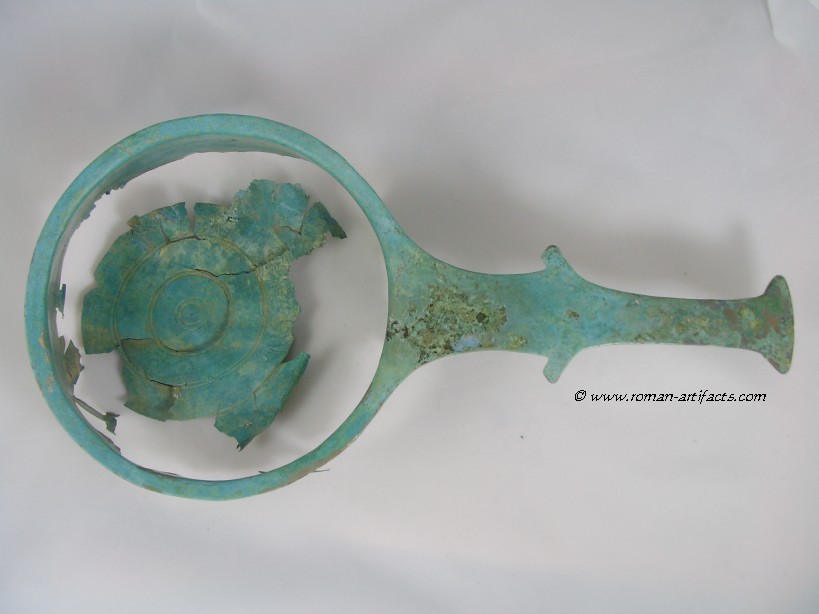
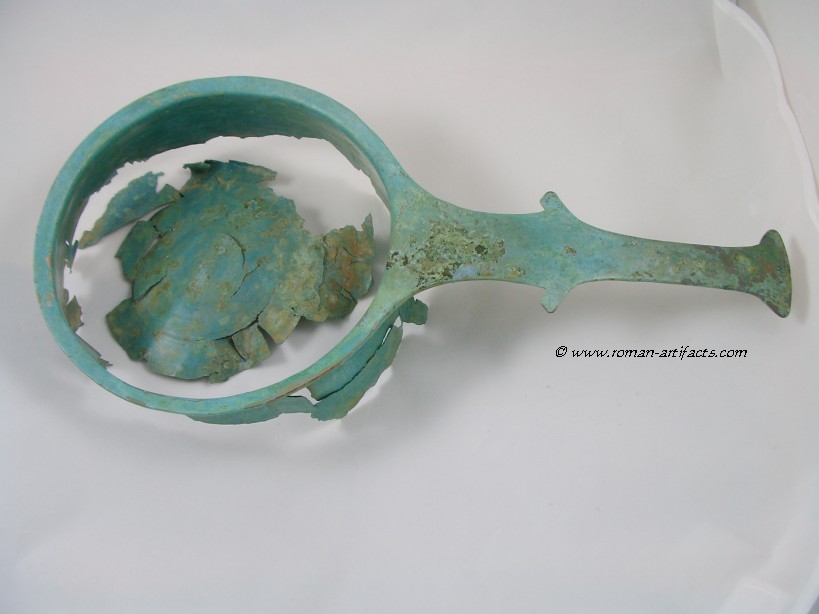
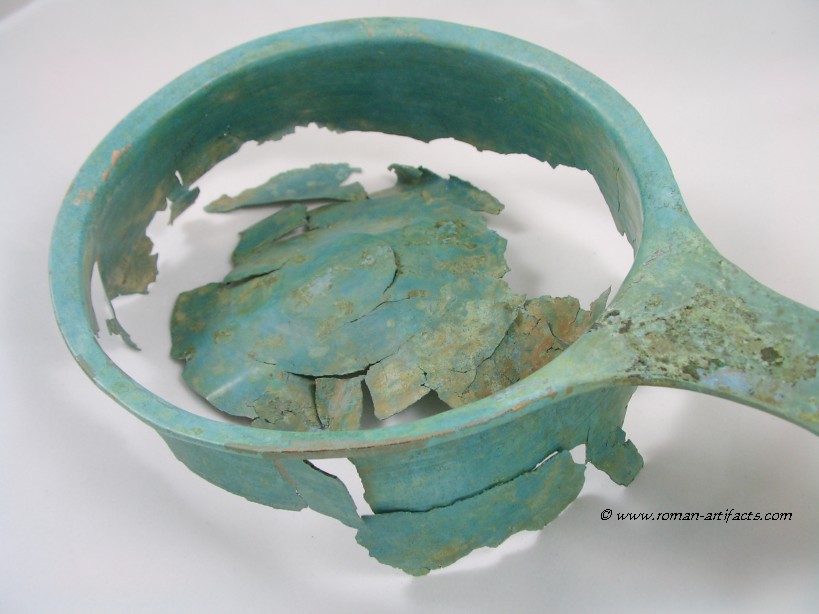
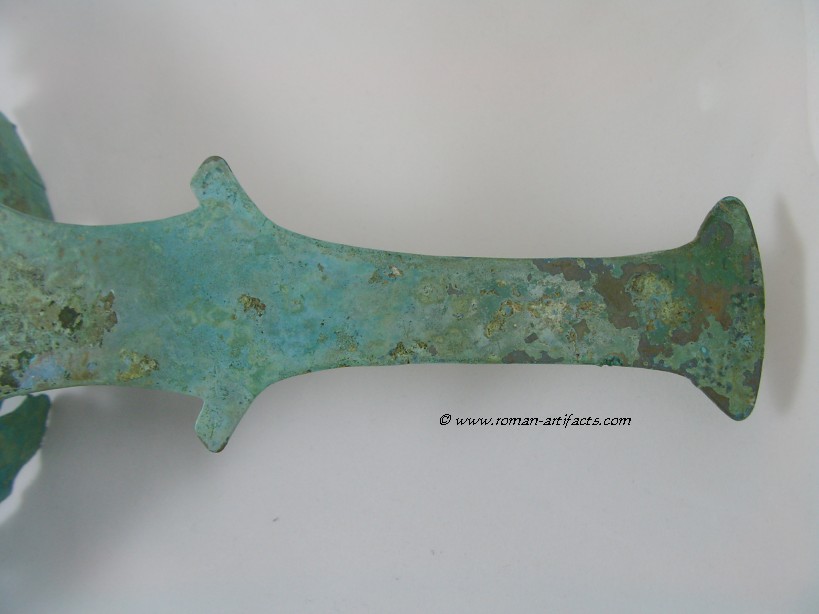
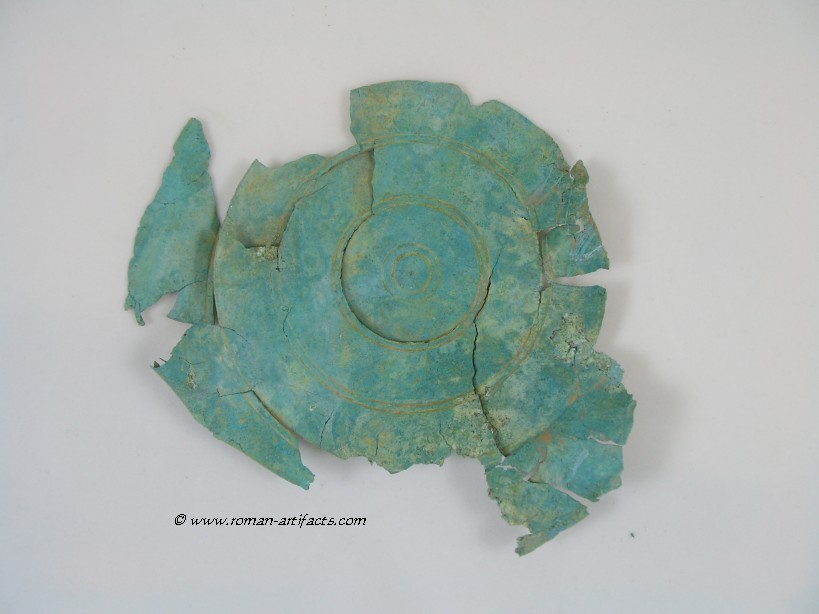
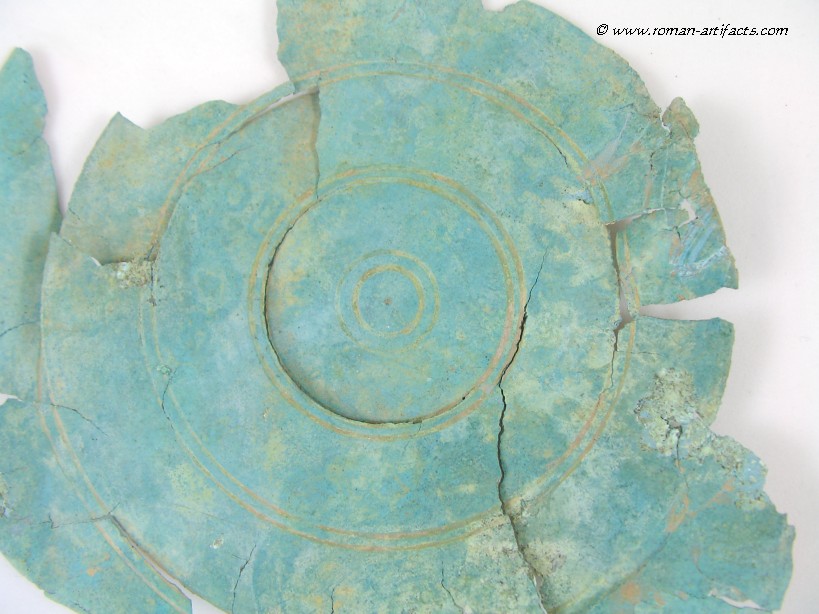
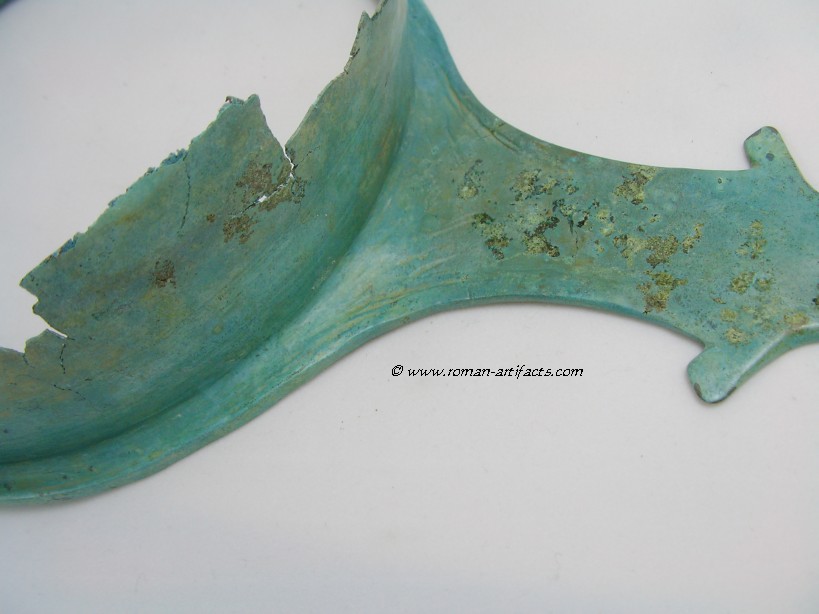
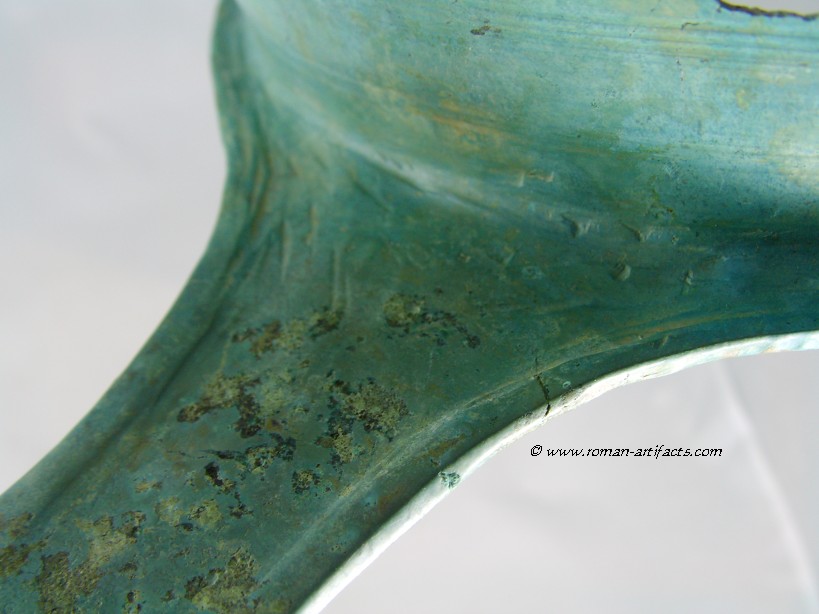
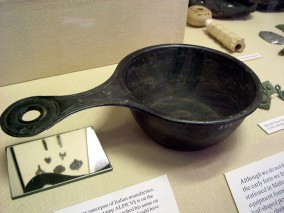
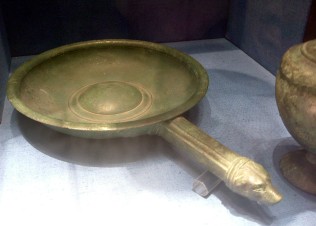
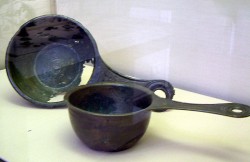
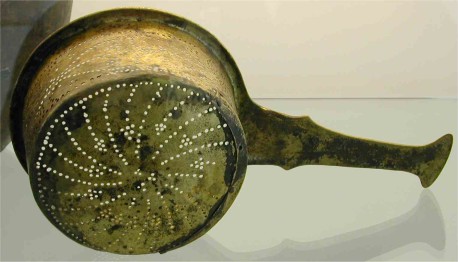
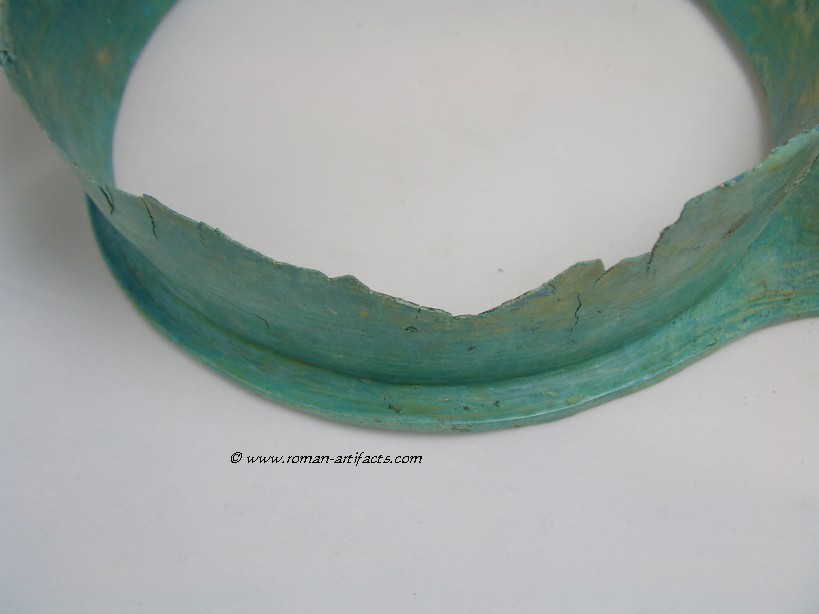
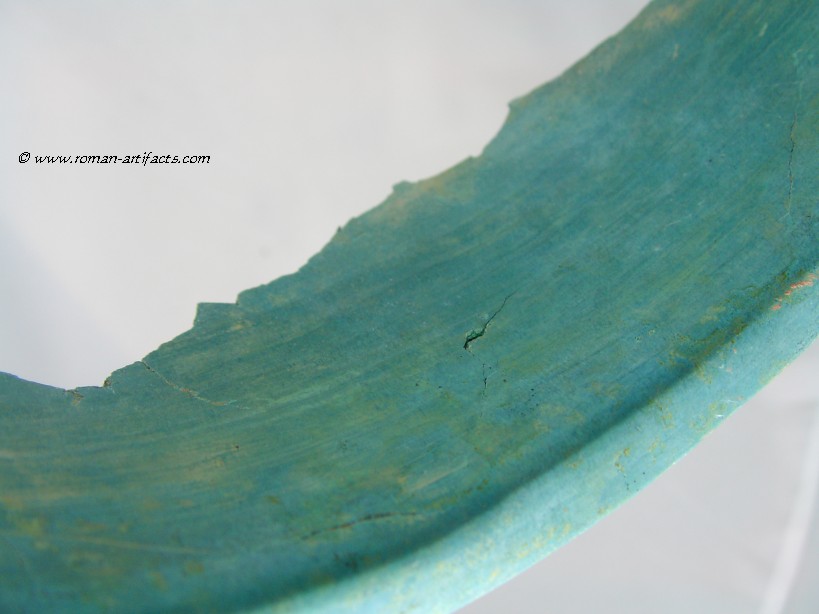
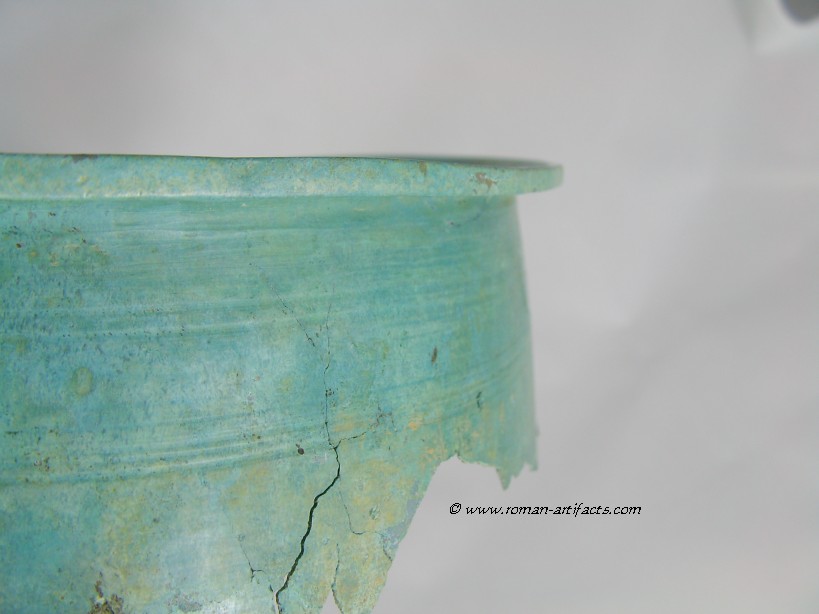
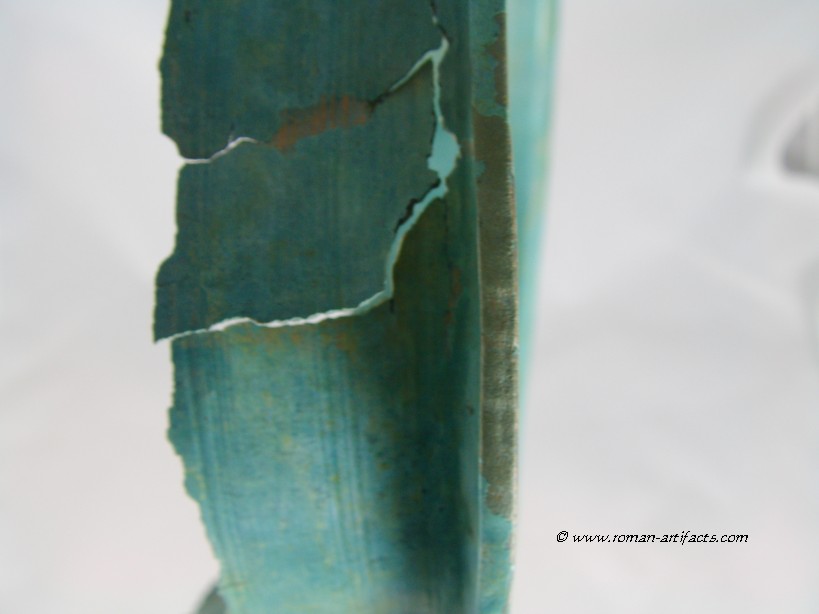
This piece is a large bronze military pan or Patera (as it is commonly referred to). This patera is obviously only fragmentary in terms of the bowl section, however it clearly still has part of the bottom in intact as well as some of the sides. The handle has distinct Roman curves and other examples are known with similar style, although I have not seen such a complete one. The handle has tapered sections with extend outwards in two points in the middle, most likely used to secure some kind of twine for suspension. It also provided a contoured grip for the hand. The base of the handle as well as the underside have clear chisel/hammer marks consistent with a metal smith working the metal to form its edge. The item was most likely placed on an anvil while still hot and hammered to produce the small "lip" or rim around the handle. The bowl section has its own unique features which will be explained. The rim of the bowl portion is quite thick, but is even all the way around. The remaining fragments of the wall have clear parallel lines running beside each other. These were not meant to be decorative, however are indications that the bowl was "spun" and not cast (by pouring hot metal into a cast). The hot metal would have been "spun" and worked outwards in a smooth manner (like a potter of a potters wheel). This resulted in thin straight lines appearing on the metal (much like a modern music symbol which has a rippled surface). This was the way helmets and other bowls were made early in the Roman period (eventually this process was abandoned in the late empire, and helmets were instead made from segments of flatter metal pieces). This spinning process was time consuming, however produced a strong and smooth surface. Casting was much more difficult to make into a thin metal, however could produce more complicated shapes. The base of the pan has many concentric circles which run around a central point. This was a distinctly Roman feature that allowed the pan to cool and heat at a much quicker pace (many modern pans have this same feature today). Earlier examples had deeper grooves which would have extenuated this feature even more, but would also have added to the pans weight. This item is simpler in style when compared to other Roman Patera's in museums, specifically ones from the Republic or early Imperial periods. The later empire developed a "Fabricae" which was basically a series of government run metal smiths. These produced a uniform and simpler equipment which allowed for some early version of mass production and standardization. The result however was that items were not of the same quality in both functionality or artistic style. This patera appears to be from such a Fabricae (1) Alternatively it could also simply be from a "cheaper" pan maker, even though the techniques used still were complicated when compared to a hammered bowl of the Medieval period. The following examples from museums show the more common early cast Pateras, however the style similarities should not be missed as are the general dimensions.
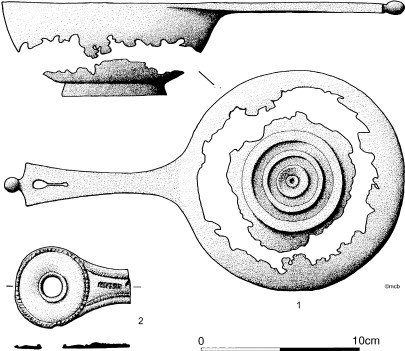
Here is a more detailed sketch of a similar item by Mike Bishop.
Roman Legions, especially when in hostile territory would make a square shaped camp once they were prepared to settle in for the night. Part of this process was to obviously make and prepare food and water. Cooking tools were a common part of a soldiers gear and would have been carried by each of them while on the march or while stations at a fort. Click on Pictures for higher resolution
|

(1) References to similar items: FEUGERE, Michel; Weapons of the Romans, page 186 2002
(2) Reference to similar items: BISHOP, M.C & COULSTON, J.C.N; Roman Military Equipment "From the Punic wars to the Fall of Rome", page 119 2006.
(3) References to similar items: CONNOLLY, Peter; The Legionary, page 9 2000.
**Note on background. Close up view of the wall of the Colosseum of Pula, Croatia. Picture taken 2014