|
|








|
|
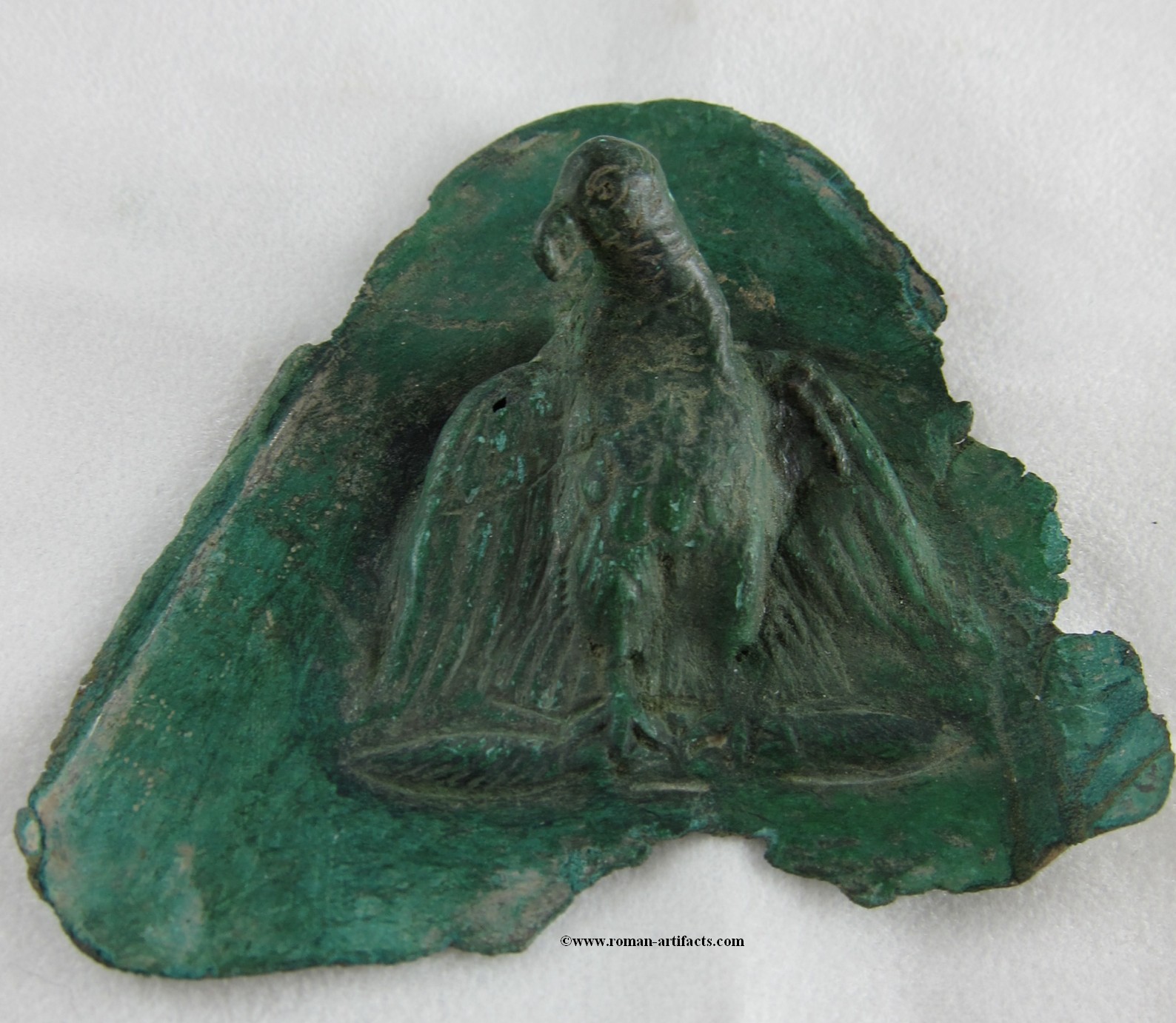
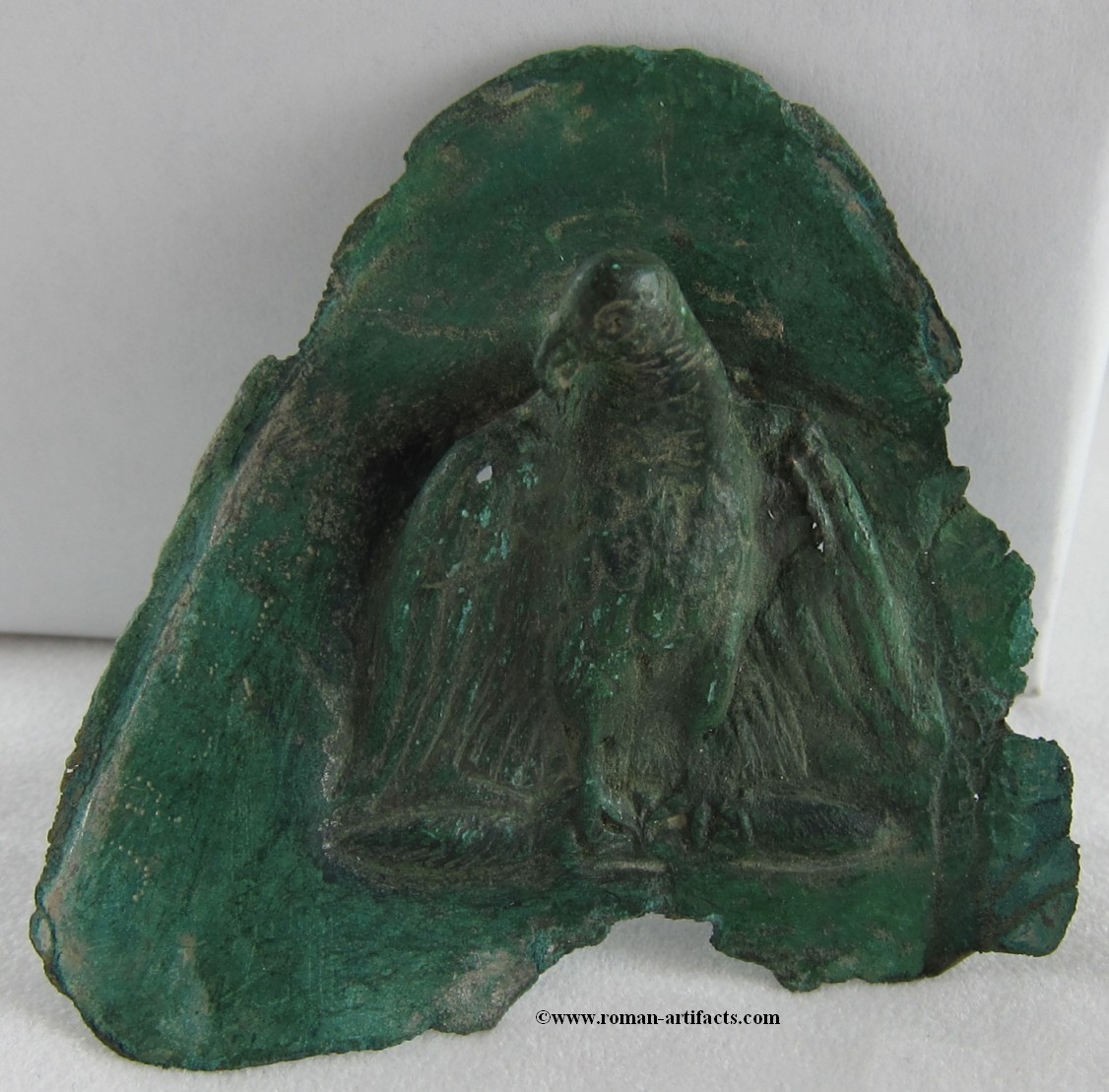
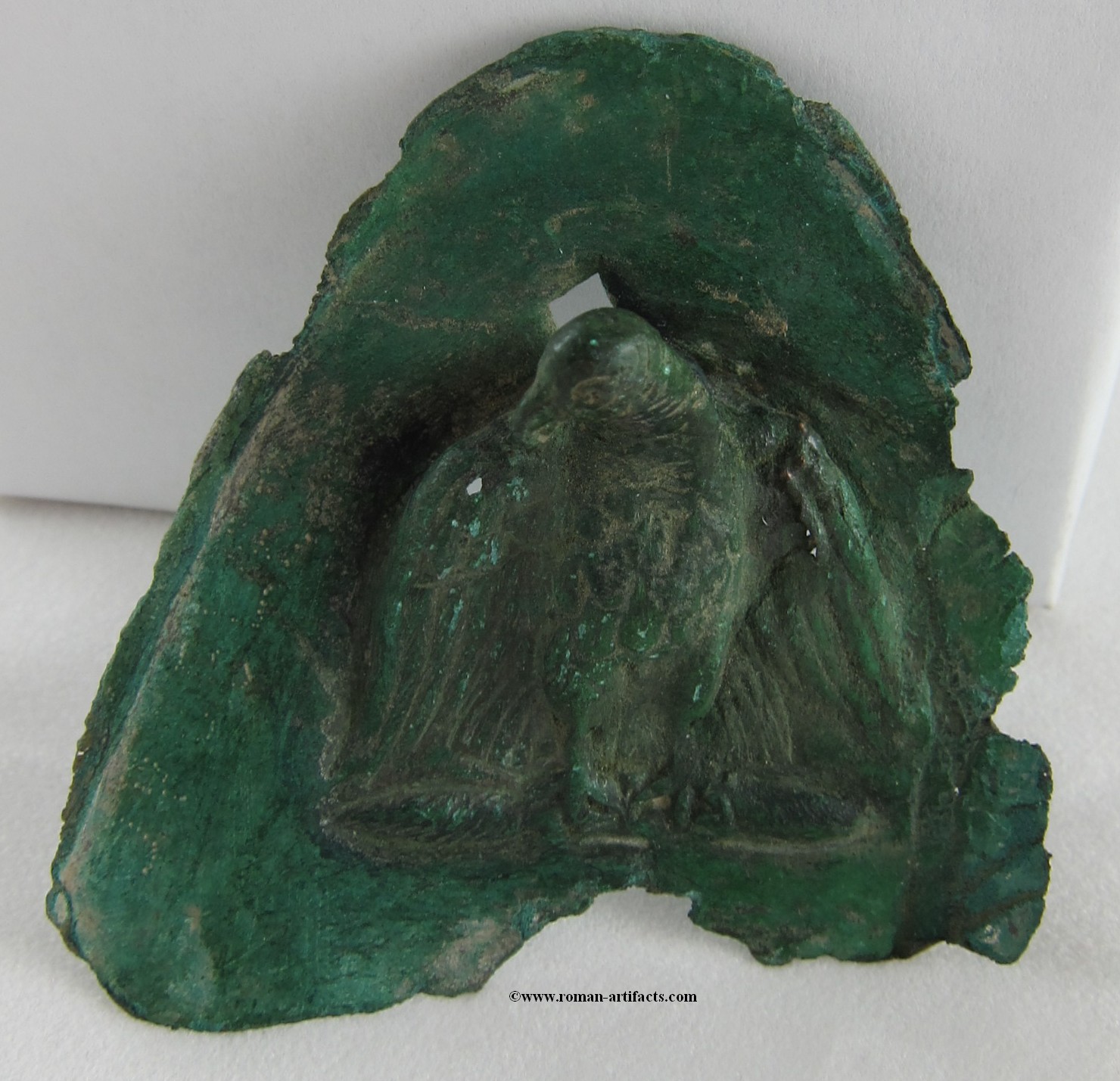
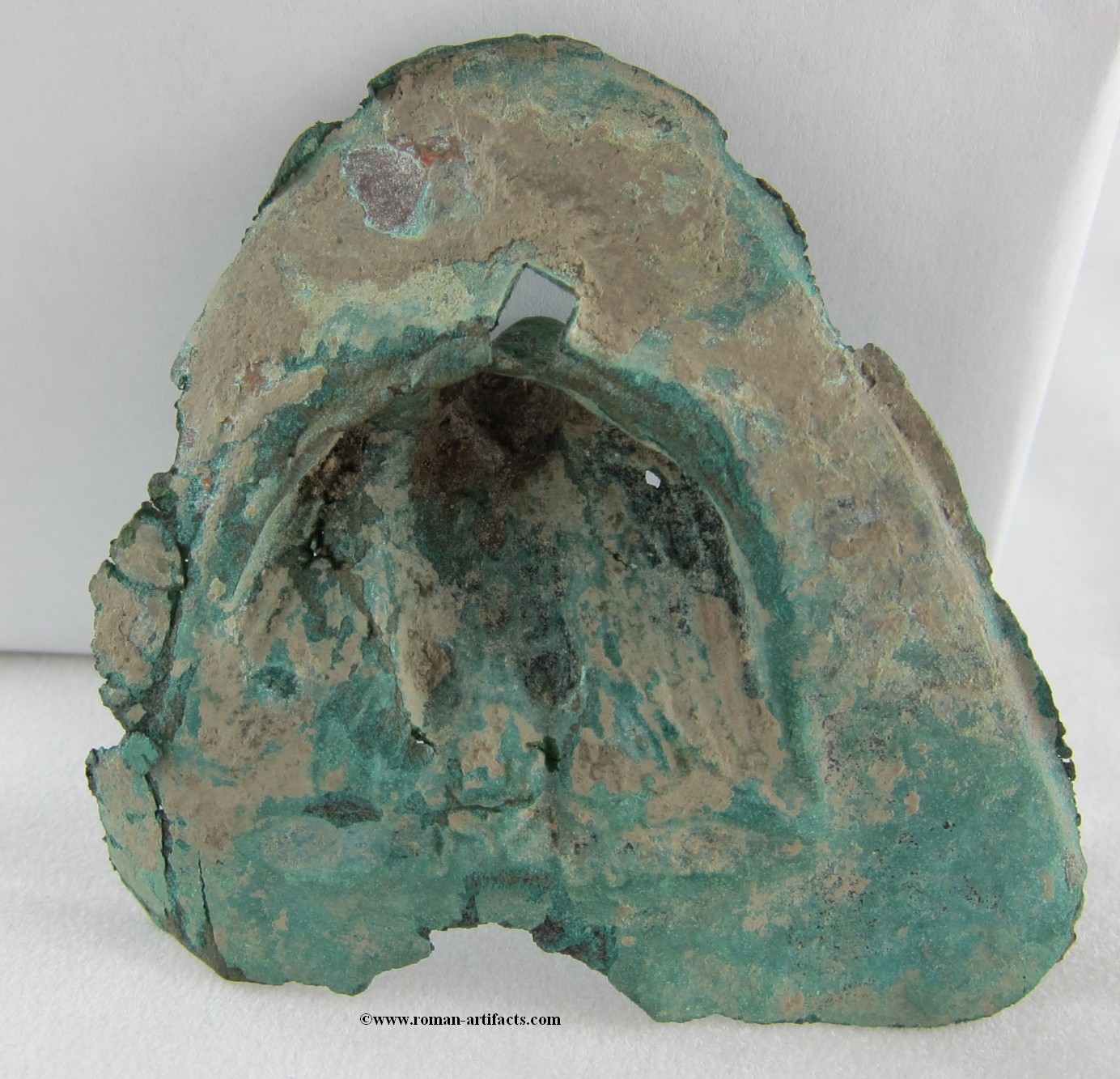
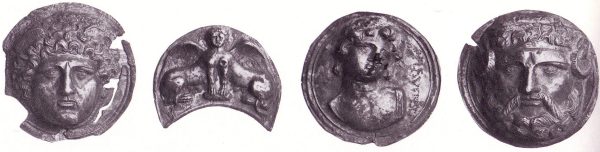
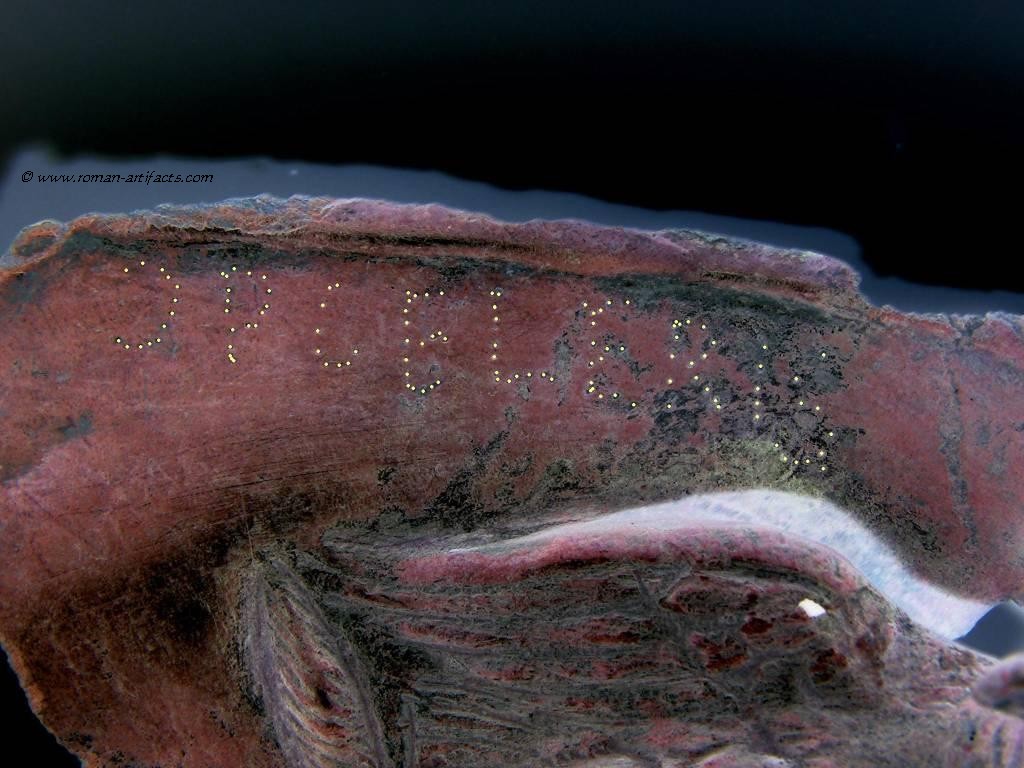
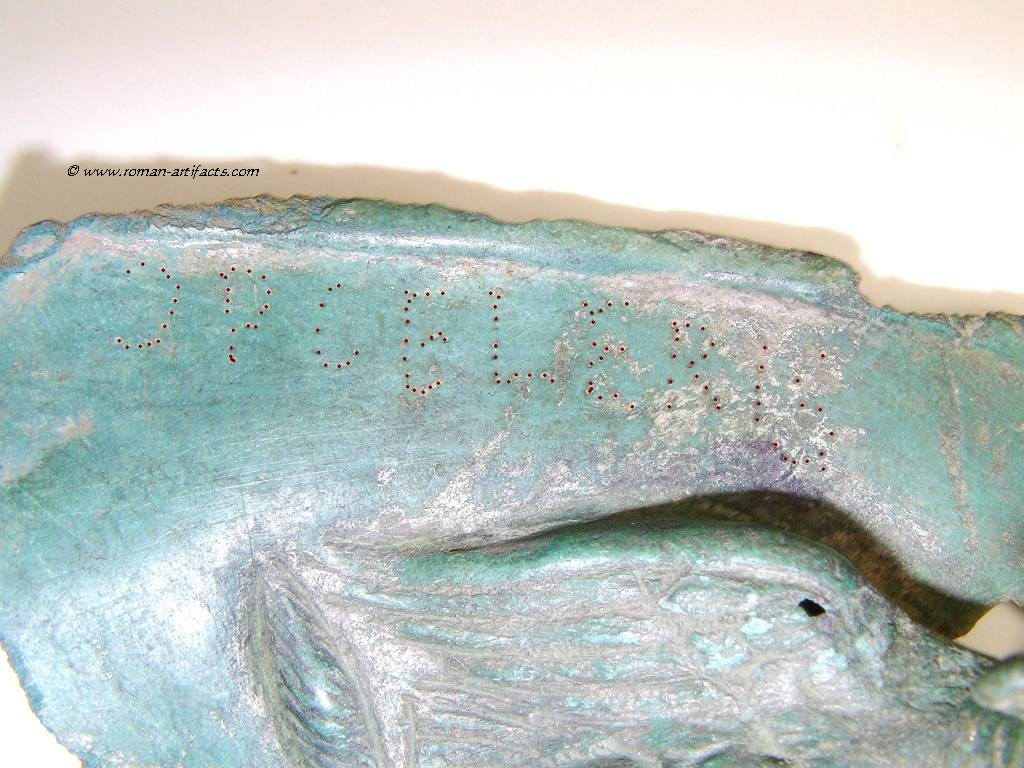
A bronze triangular Phalera or Military decoration/Award. The item has a protruding military eagle with head turned right, perched on top of a military style thunderbolt. The eagle is extremely detailed and fine lines show off the feathers, head, claws and wings. The fragment has a square hole in behind the eagle head where a rivet would most likely attached it to a leather backing. Of greater interest is the punched in text along the left side. This text was added after the items manufacture by the owner, something that was done on many pieces during this period. It was a way for the owner of the item to personalize a piece of equipment that they always had with them and were responsible for. The text is formed with numerous dot impressions (see highlighted images). The text reads as follows: Э P CELERIS P. Cerleris is a name and literally means "quickness or swift" in Latin. It was a known last name during this period (a similar inscription is found on a Roman helmet from Mainz in which a legionary inscribed his name and legion: Leg I L.Lucretius Celeris).(1) The P would have stood for his first name, perhaps Publicus. Э is a symbol used on inscriptions for Centurion, the leader of a Cohort of Legionaries. The full inscription reads: Centurion P(ublicus?). CELERIS The item was most likely part of a Roman Centurion's "Dona Militaria". This leather checker patterned harness, which was worn on top of the armor in ceremonies or special occasions, consisted of honors and decorations that a Soldier had earned. Examples of these harnesses are seen on many Roman tombstones, each soldier showing off their decorations in a symmetric pattern. The Romans, especially those in the military considered bravery and courage above all else, and it played a significant role in ones status. The Military would award soldiers for their bravery and Caesar himself mentions many different soldiers by name in his writings who had acted out in bravery during combat. Examples of these Phalera or metals/awards are known. Some are highly decorated in silver and even gold. The shapes are round or crescent shaped, however this item clearly is triangular, and perhaps a previously undocumented shape. Many are also inscribed with the name of the owner, since they were highly prized and unique pieces. (1) Examples from the early1st Century AD (the one second from right also has some text dot punched to the side).
Many Roman monuments or tombstones illustrating the wearing of such military decorations survive to today. Gnaeus Musius, the standard-bearer of the Fourteenth Legion, whose tombstone is in the Museum at Mainz (see left), wears nine plain circular phalerae, while the centurion Q. Sertorius Festus at Verona has likewise nine phalerae decorated with a Gorgon, Bacchic heads, an eagle, and a horse. So far as can be seen, the selection of designs was purely arbitrary, but possibly the more elaborate forms belonged to the officers of highest rank. Not infrequently the phalerae on their leather framework appear in a panel on a tombstone. Thus they can be seen, nine in number, displayed on the monument of the horseman Caius Marius at Bonn. It is clear that Centurion P. CELERIS was a soldier of who was decorated and most likely a distinguished officer.
Click on Pictures for higher resolution
|

(1) References to similar items: FEUGERE, Michel; Weapons of the Romans, page 53-56 & 205 2002
**Note on background. Close up view of the wall of the Colosseum of Pula, Croatia. Picture taken 2014