|
|








|
|
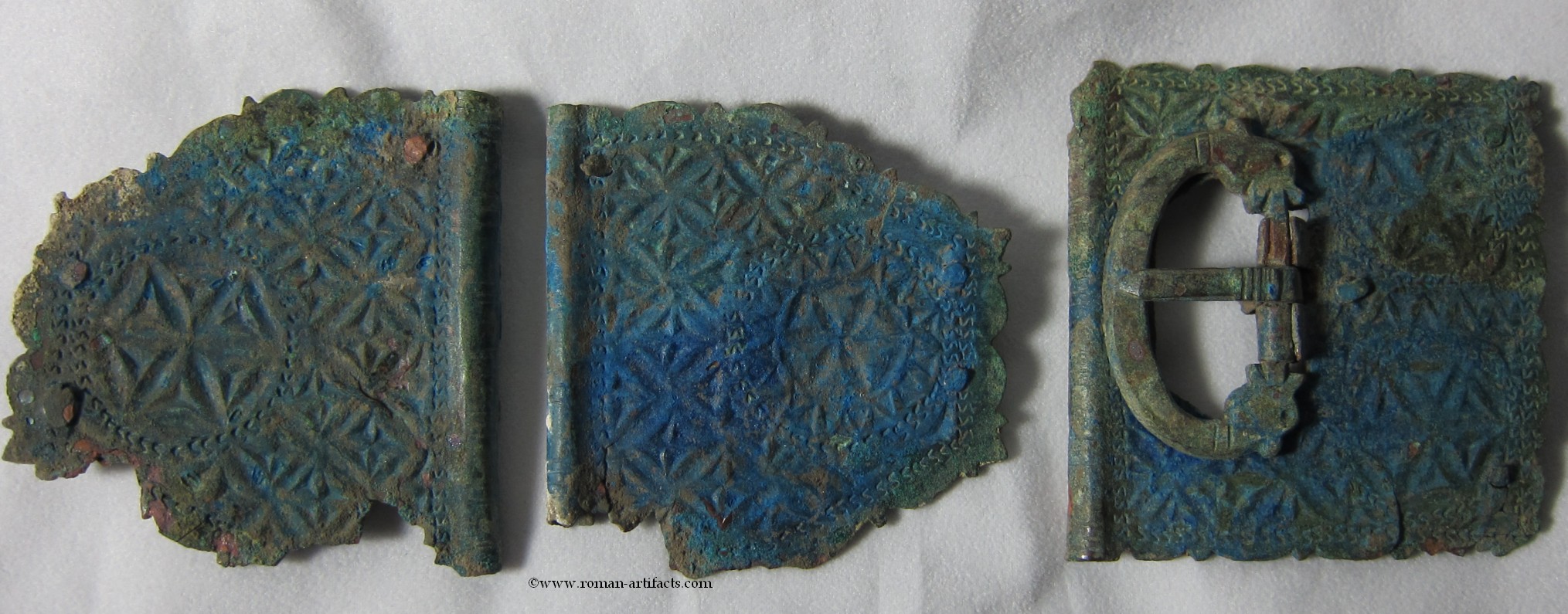
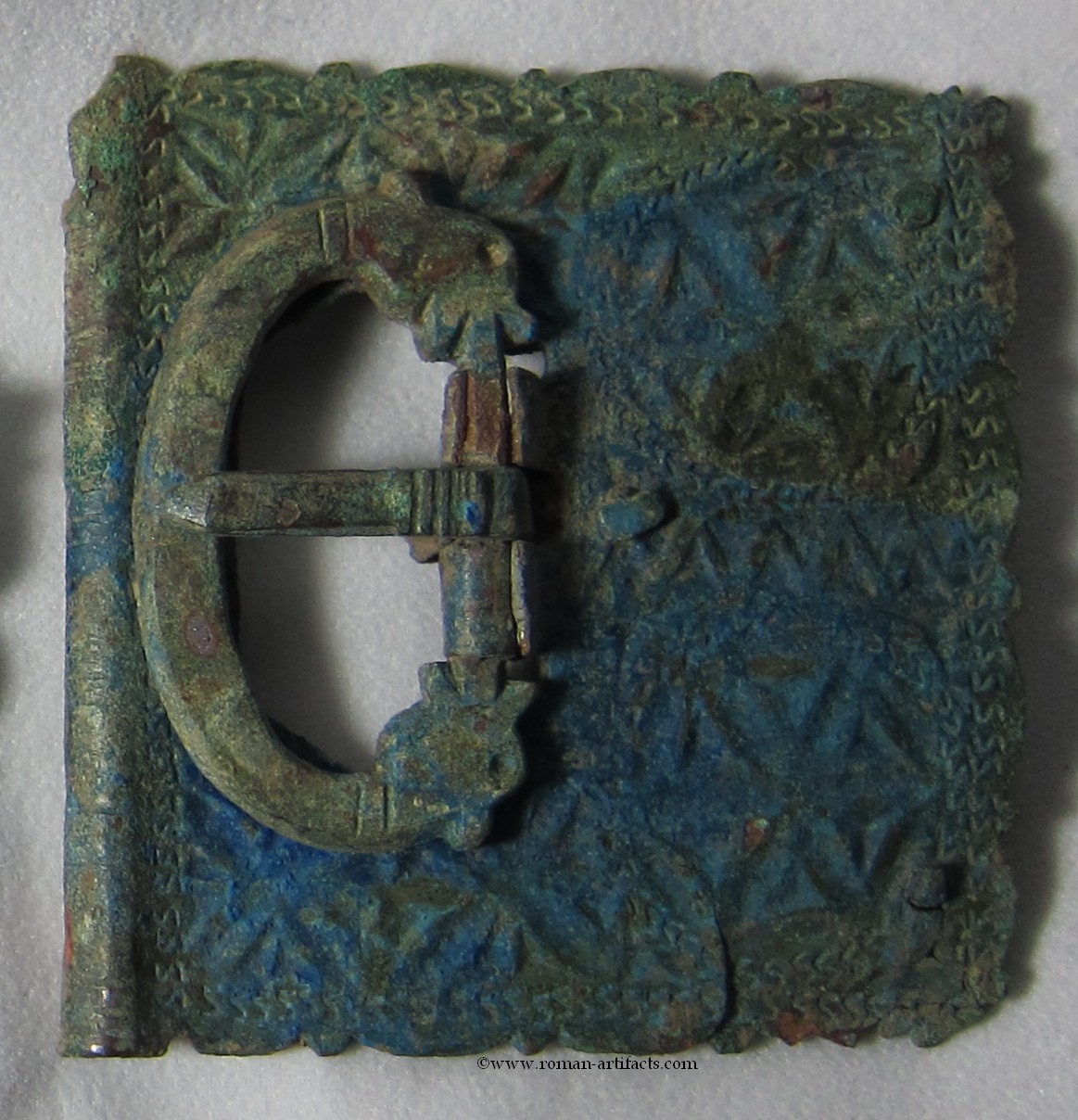
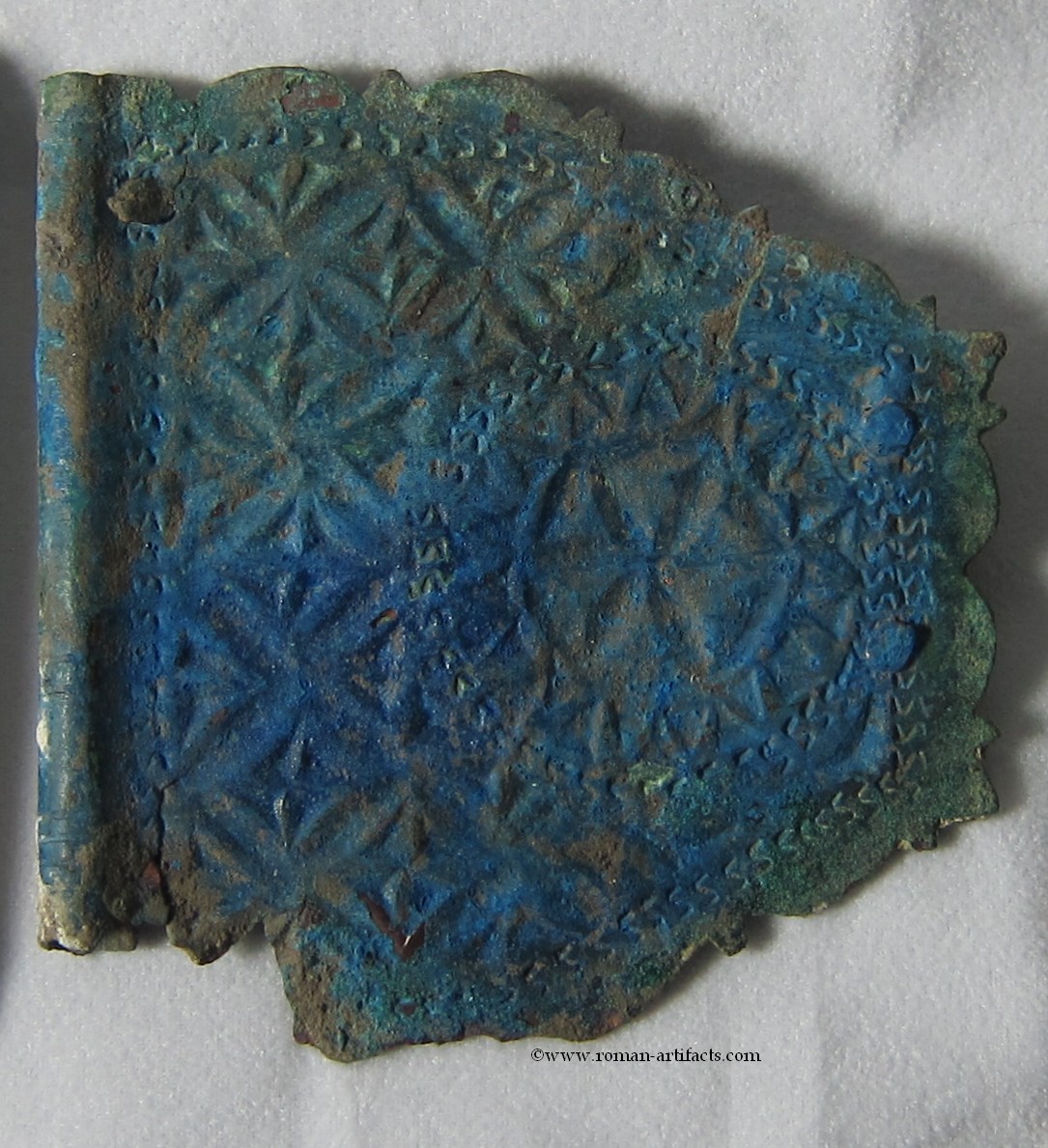
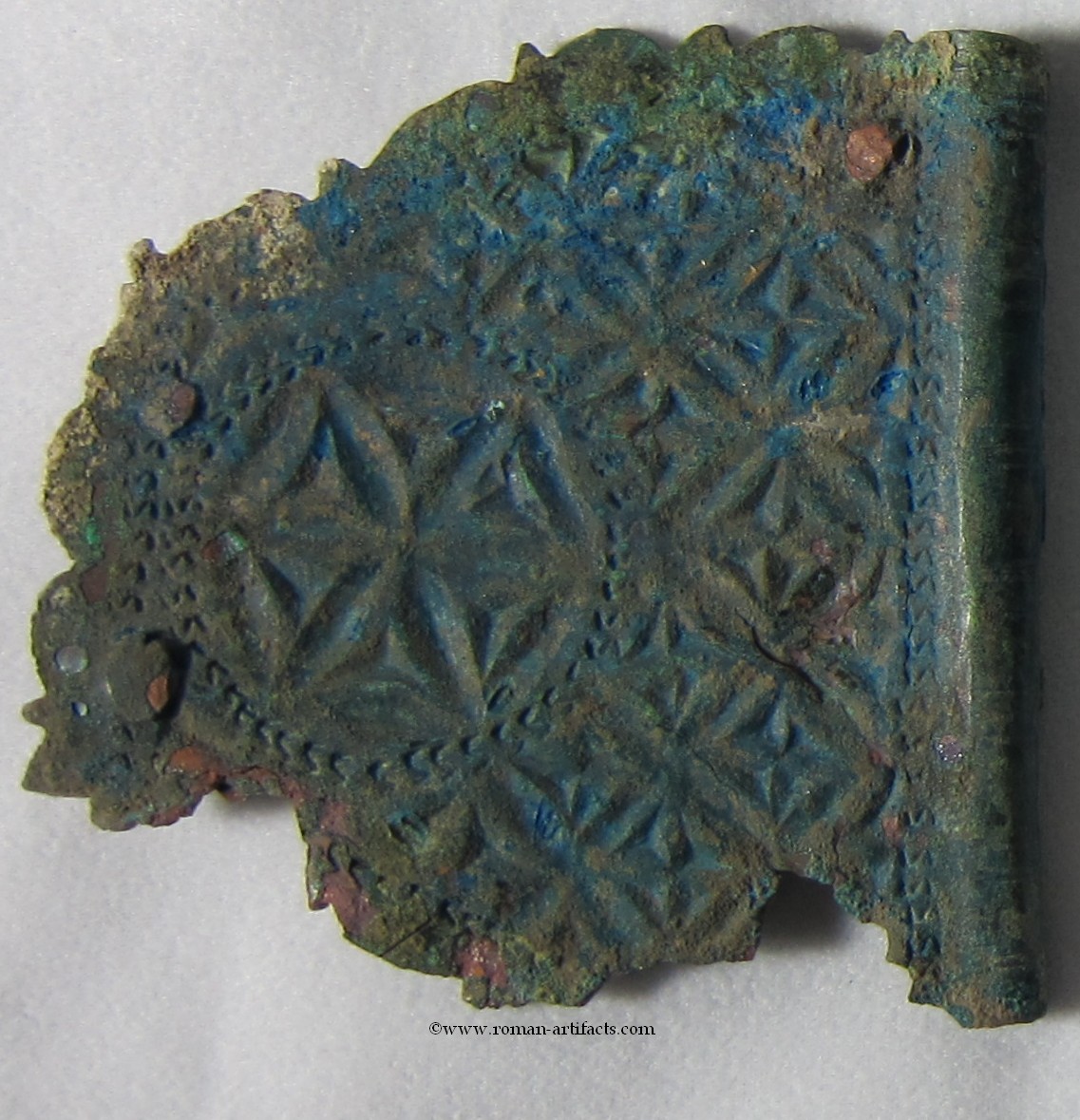
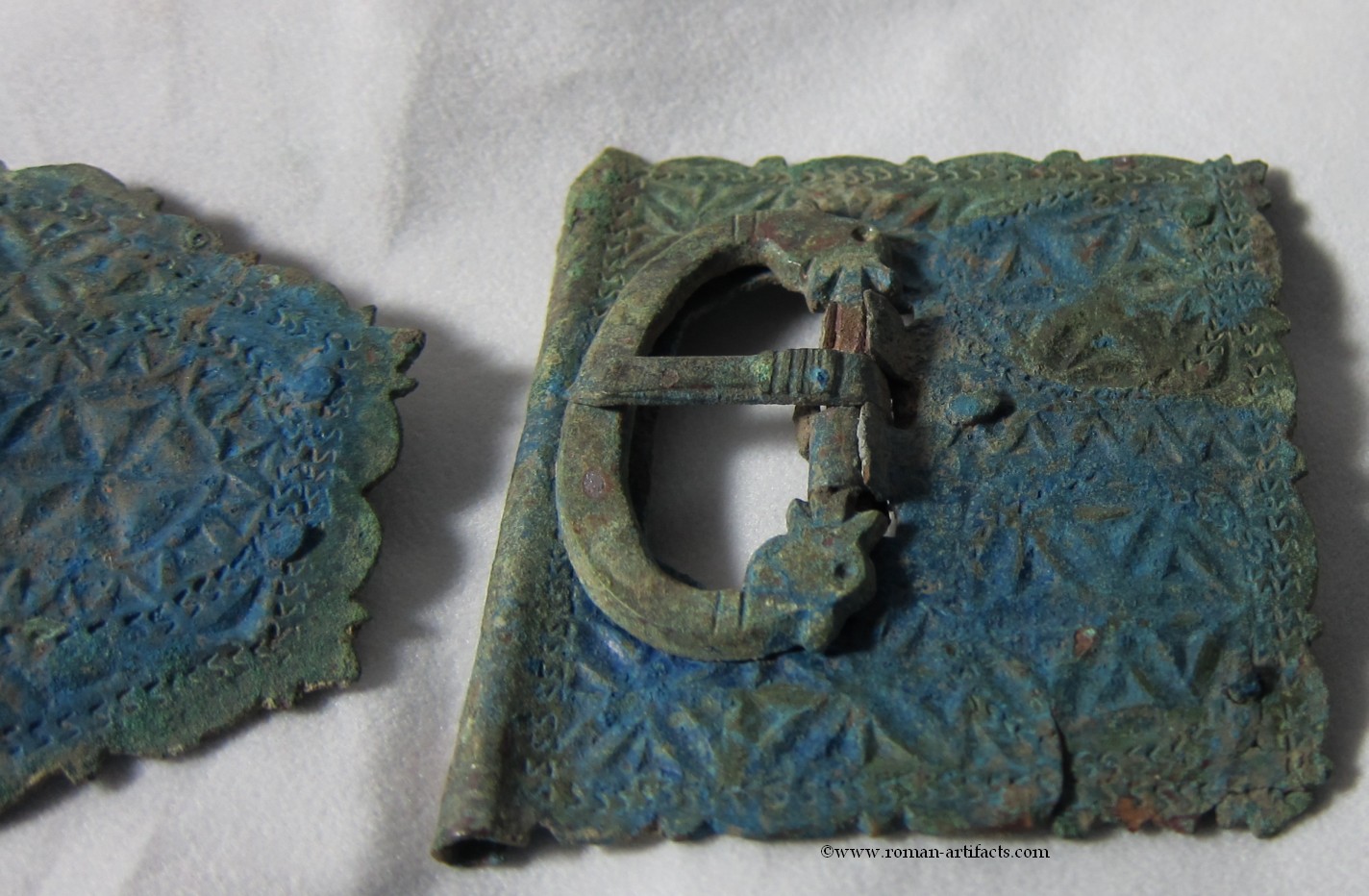
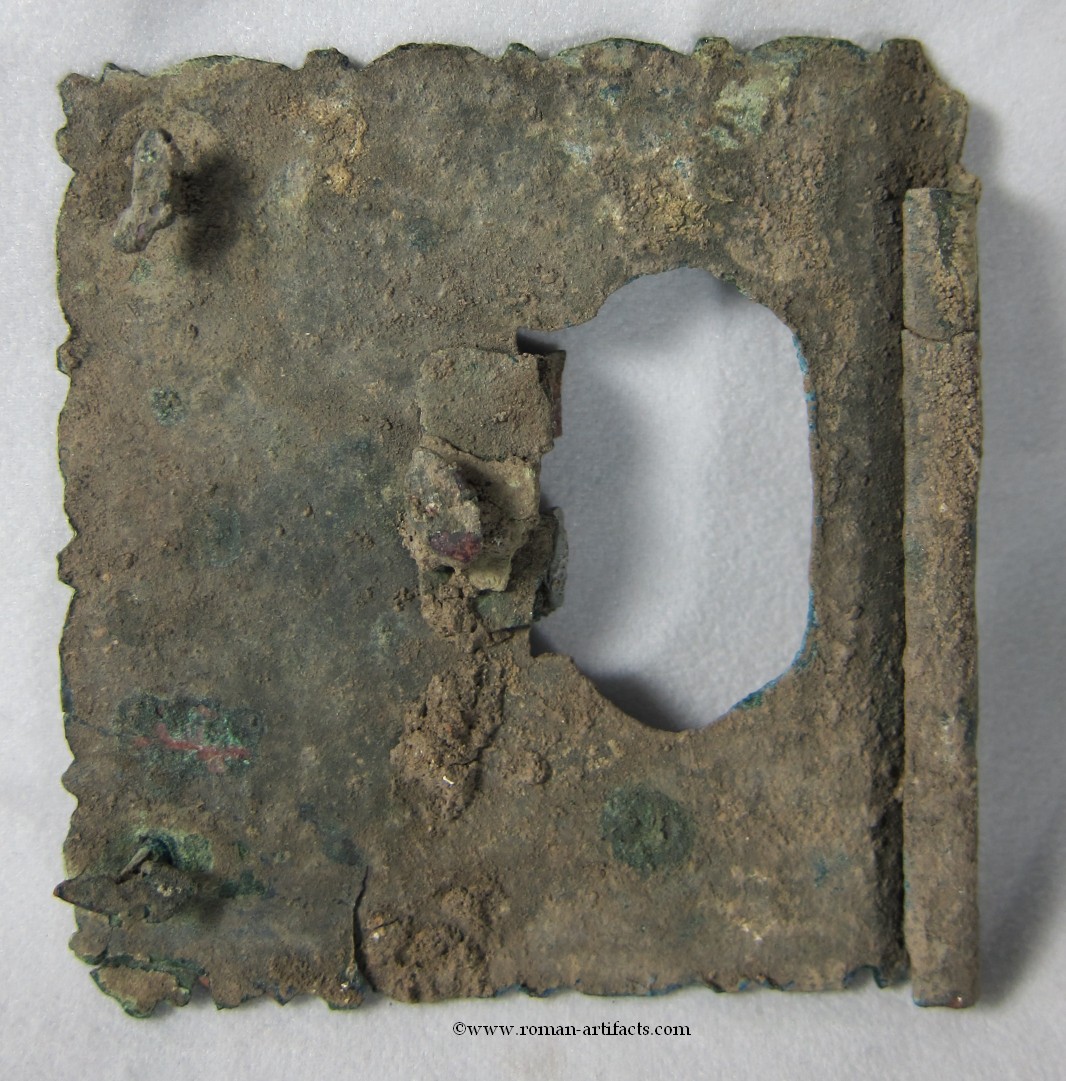
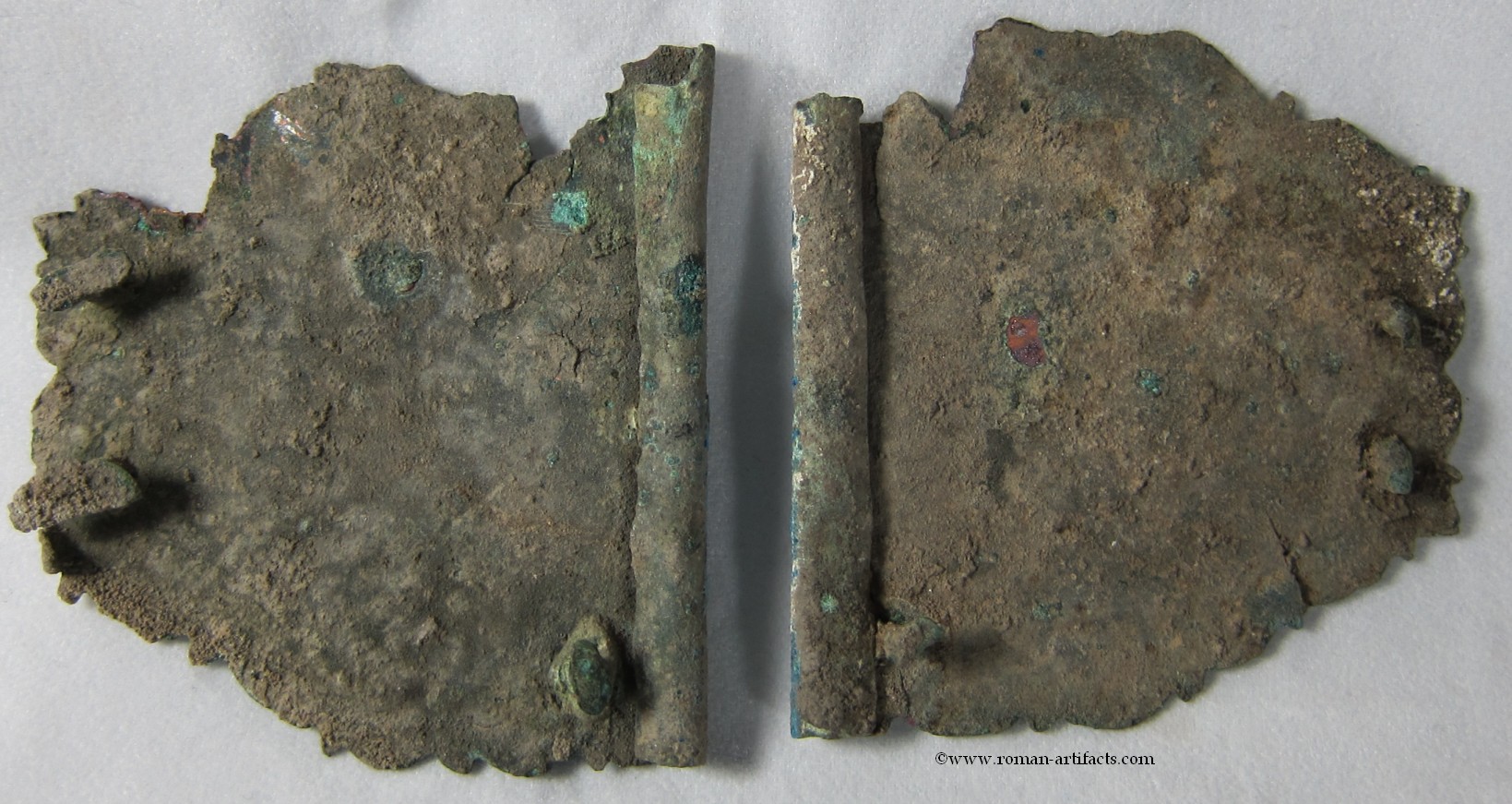
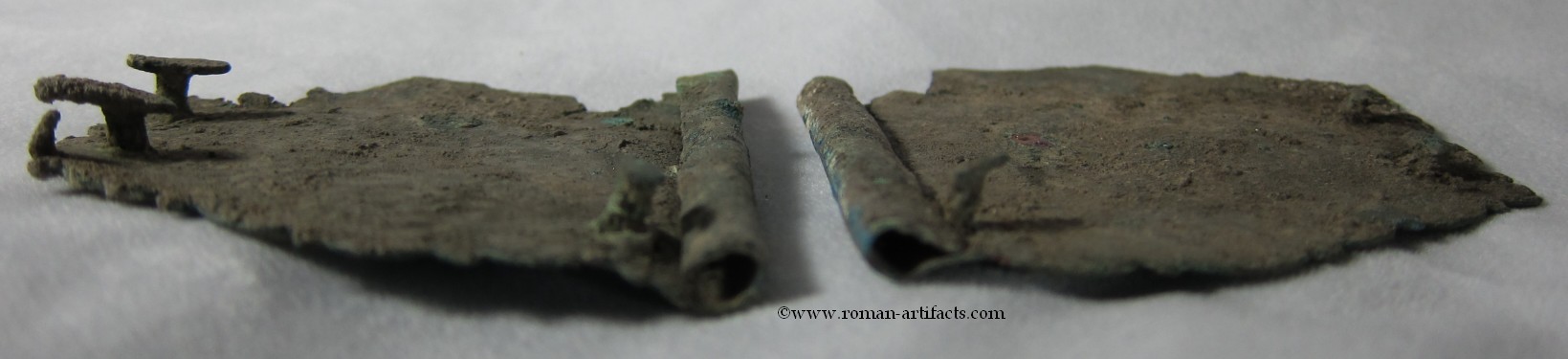
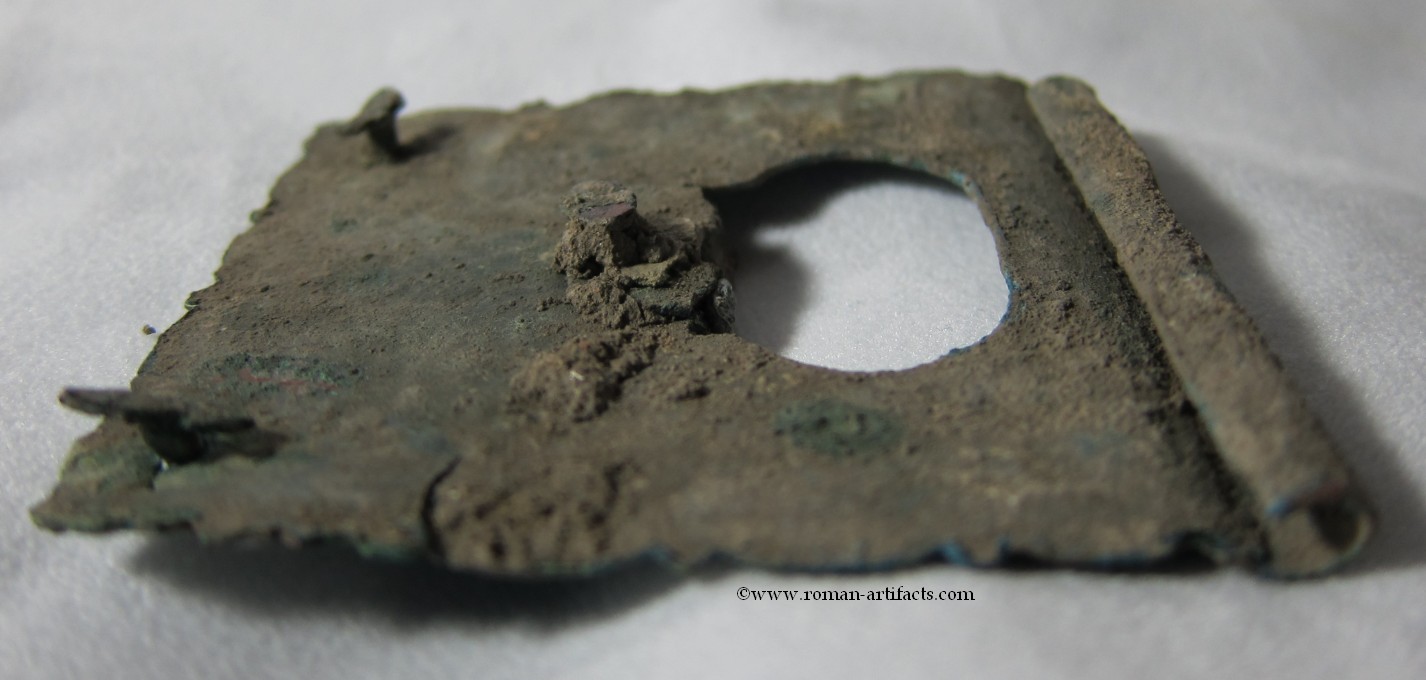
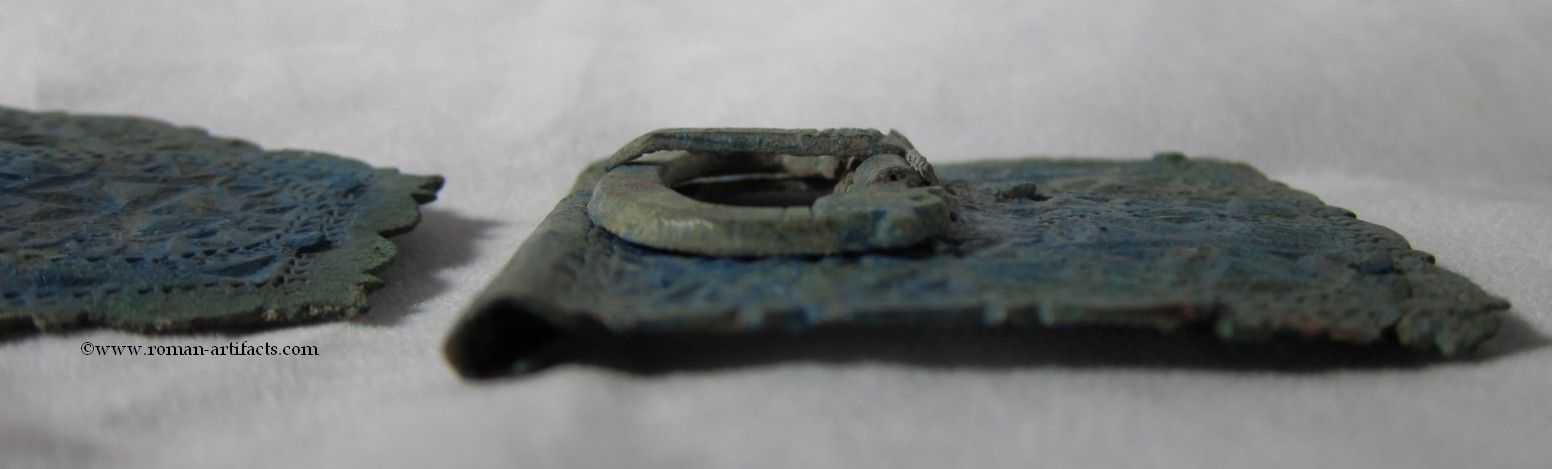
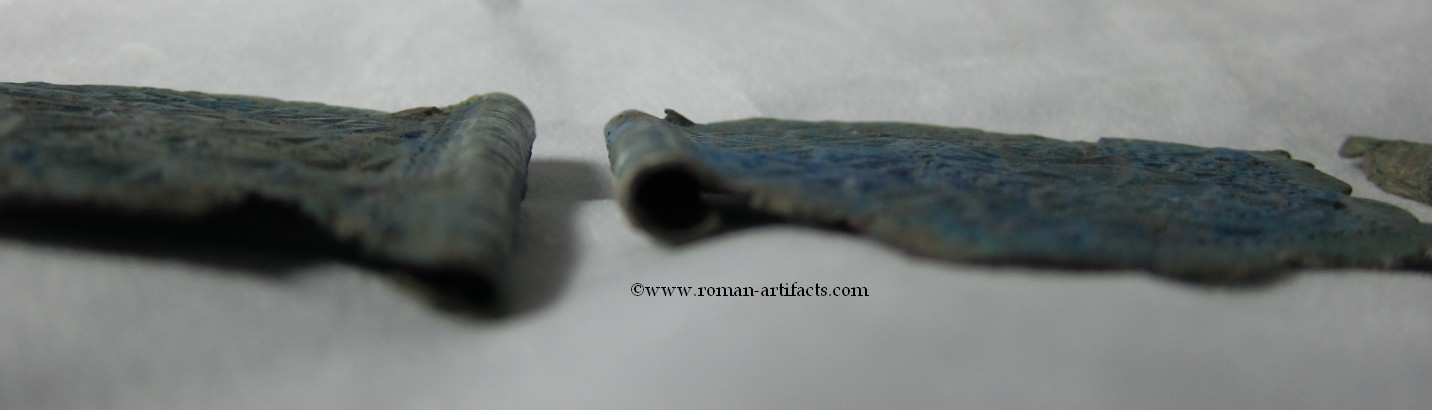
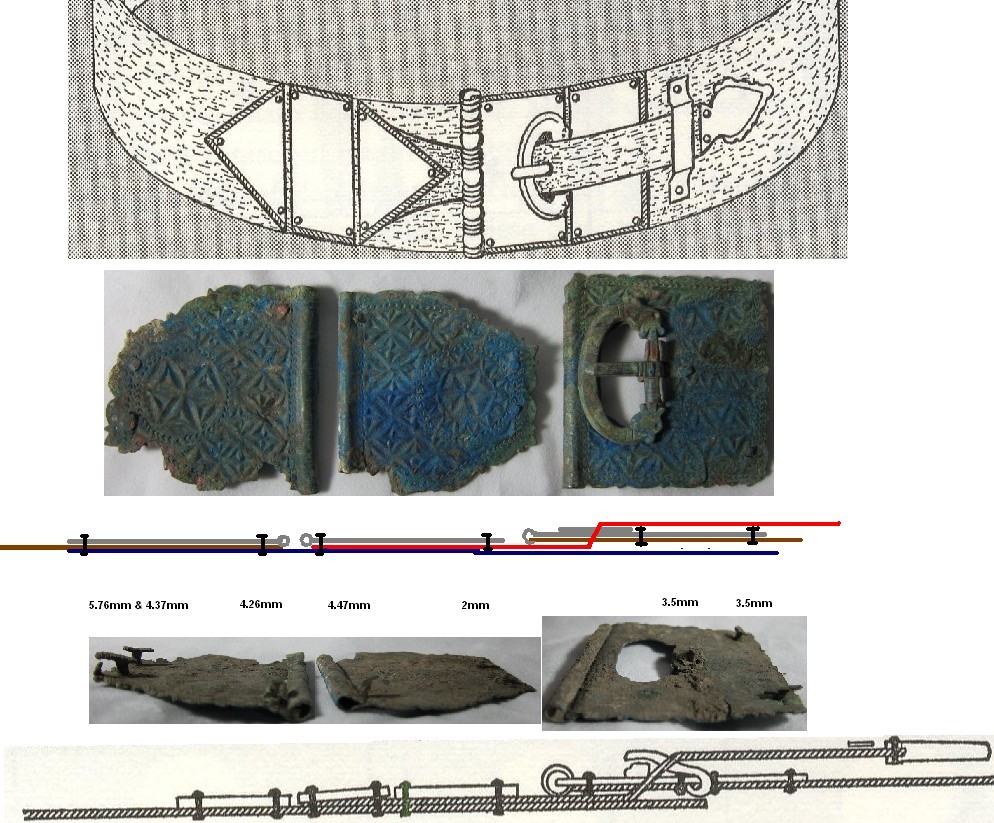
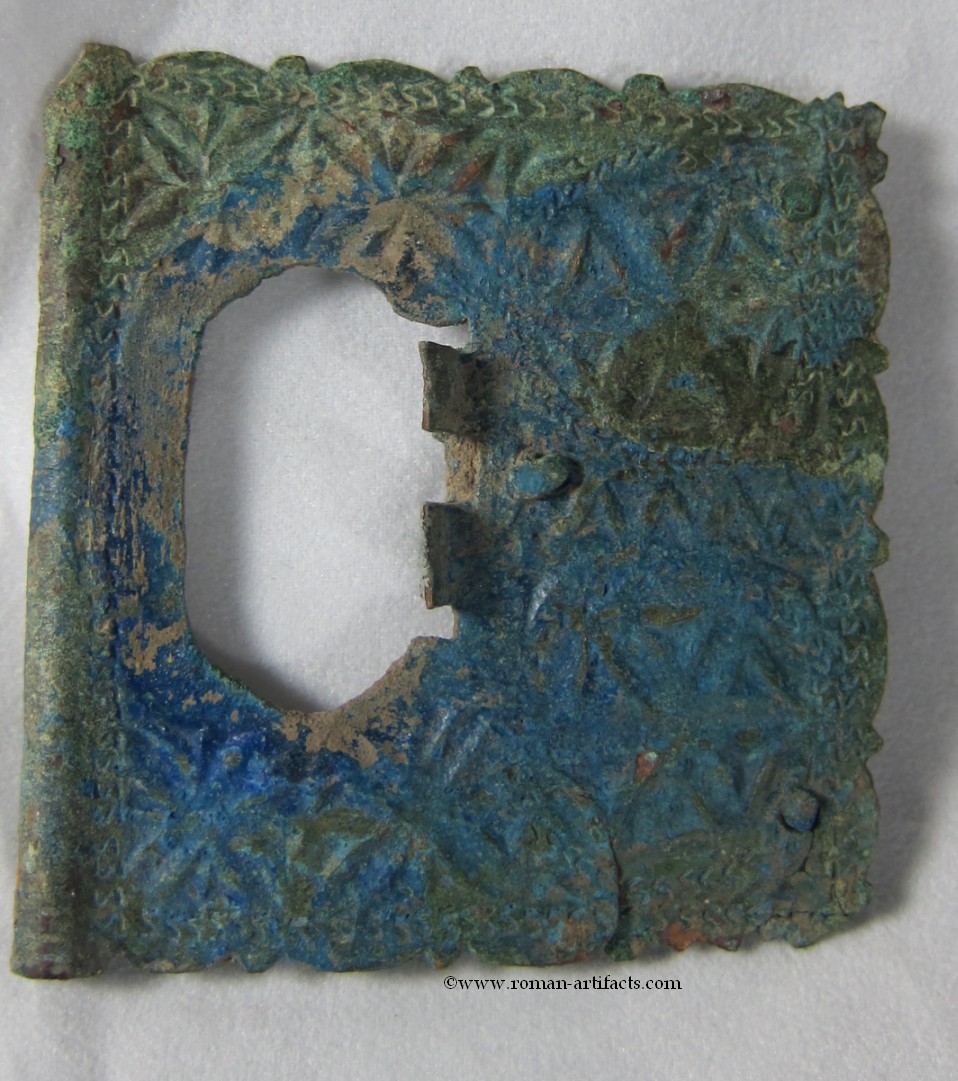
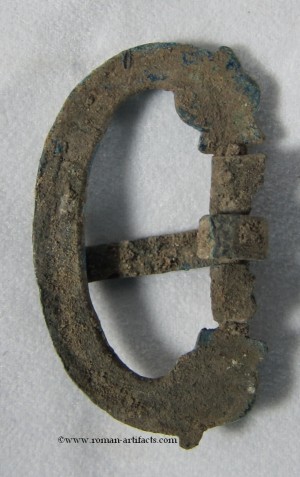
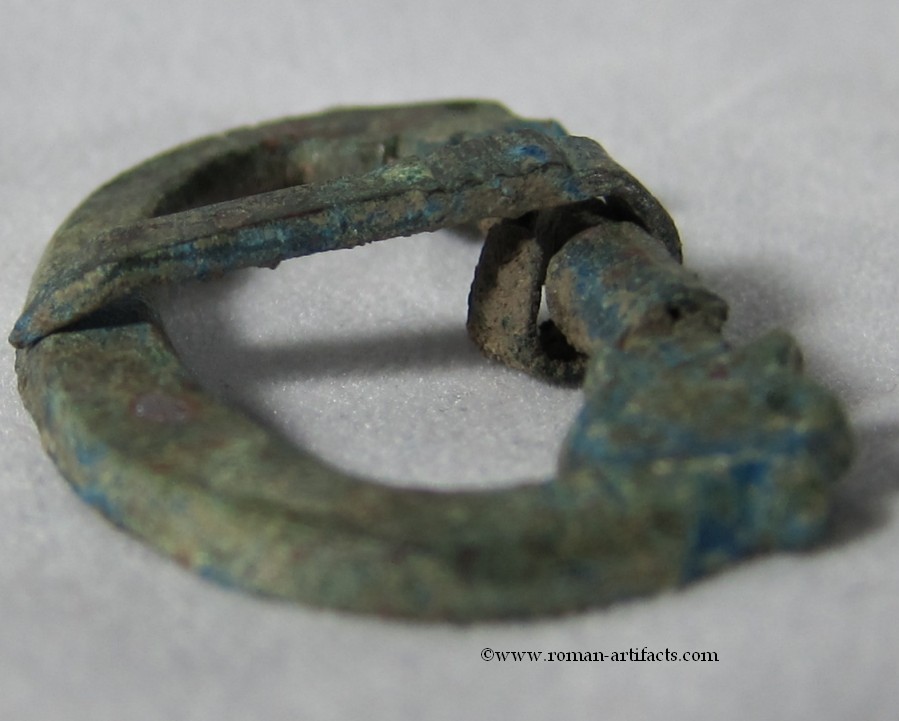
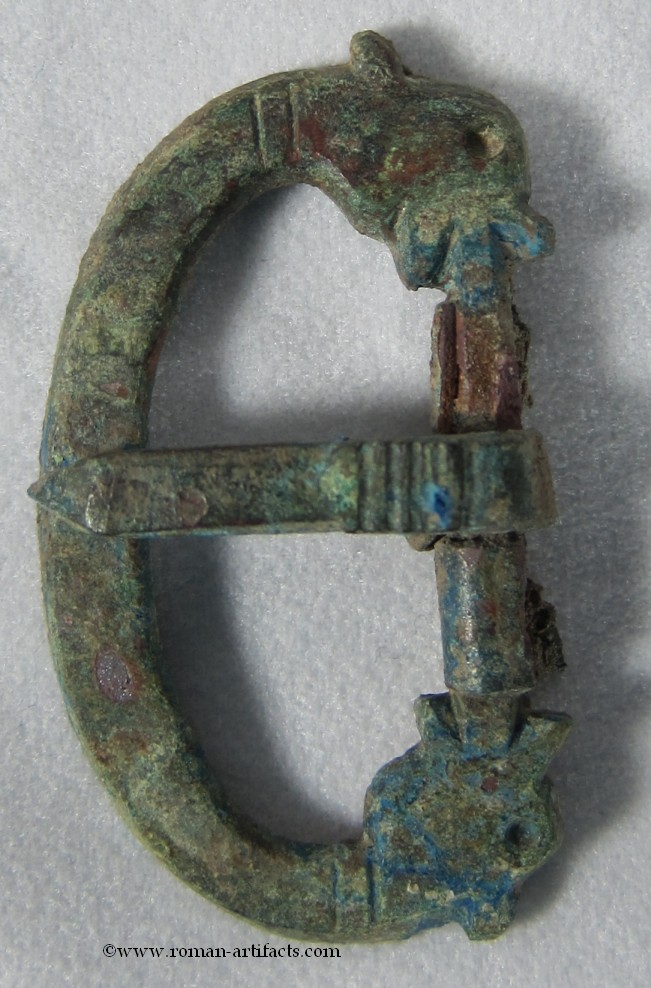
Three bronze belt plates from a late Roman Legionary. These three plates can be broken down into two descriptive sections. 1.) The Buckle plate, consists of a buckle loop with two serpent/dragon decorations facing the hinge. The heads of the serpents are clear and have two eyes, a gaping mouth, ears and scales (two parallel lines at the neck). The buckle tongue is smooth except for four groves running parallel near its base. The tongue also comes to a sharp curved point. The actual decorated plate is well preserved with one side raised in a tubular fashion, while the remaining edges have a decorative consecutive wavy pattern. The tubular side has parallel lines engraved into it that run vertically along its surface. The surface of the plate is also highly decorated (chip-carved). There are two circles with triangular insides surrounded by a multiple small "triangles" defining a border. The remainder of the plate has flower or a clover leaf pattern, as well as a Zig Zag line that divides the two circles. A border consisting of wavy lines in the shape of "S's" surrounds the chip-carving and divides this design from the outer edging. Three rivets remain in place where they would have attached to the leather belt. The rivets are curved over at the end (see measurements above), indicating that the leather was once that thick. The reverse shows how the bronze "hinges" were bent back and held in place by the third rivet. 2.) The two secondary plate look similar, but are in fact slightly different in their decorative appearance. The central circular motive is different on each plate. The first plate has a simpler chip carved design, while the second one is more elaborate including a second ring of design within the S shaped border. They are both pentagonal in shape with the same wavy border as the Buckle plate. This surrounds the edges, expect for the two raised tubular sides. The tubular side has parallel lines engraved into it that run vertically along its surface. The remainder of the plates have a flower or a clover leaf pattern that fills in any empty space. Another border consisting of wavy lines in the shape of "S's" surrounds the whole plate and acts as a divider from the wavy edging. Four rivets would have held the plate to the leather, however each one only has three remaining in place. The rivets are curved over at the end (see measurements above) indicating that the leather was once that thick. A dark green & ocean blue patina covers all the plates and they are all in an excellent state of preservation. This belt type matches one of the ones found at Oudenburg (Belgium). They were generally between 5-10mm wide with a rectangular and pentagonal sections. They had the distinctive decorative chip-carved pattern which had a wide range of design. A very artistic feature for these belts, that surpassed many of the simpler earlier belts. The integrated buckle loop usually had a dolphin/Dragon(serpent) design which met at the hinge as opposed to head-head as earlier styles commonly did. (See a great buckle website Late Roman Buckles in Britain) Many of the plates had a tubular edging on one of the sides. Usually accompanying these belts was a similarly designed narrow vertical slide where the belt end would pass through. The belt tip also normally had a small matching tongue or circular terminal. (see Baldric Belt Tip) Scholars had previously associated this type of belt as Germanic in style, however recent views are changing this simple designation. There are many Roman marbel or stone reliefs that show these type of belts and many of the known examples have "classical" motifs, normally associated with the Roman Empire. Furthermore very few examples exist outside of the Roman frontier in Free Germany. The Roman army by this time had incorporated large Germanic elements especially in the West so their influence on style was no doubt felt. This suggests their use by normal Roman soldiers/Legionaries, military officials and officers as well as German equipped soldiers. The belt was an important part of the Roman Legionary's equipment and uniform and during the 4th Century they were still highly decorated and works of art. (1)(2)(3)(4)(5) Analysis of the belt plates to determine orientation on the belt: The rivets and their depth/spacing at the back provide a very telling piece of evidence on the belt leather thickness. Using these measurements a logical placement of the belts can be done to correspond with a belt and the applicable rear pieces of leather. When the two triangular plates are laid out, they clearly indicate thicker leather than the main buckle piece. Also the one end of one plate has very small gaps in the rivets. This can be logically explained by a system where by the main leather belt piece goes around the body and has the main buckle plate attached at one end. Near to the part where the leather would join again, a second piece of leather is added. This leather piece runs along in behind the second and continues to act as a "backing" to the where the two belt ends join. The first triangular buckle attaches through these two layers of leather (Which is why the rivets are longer). The second triangular plate attached through both layers at the beginning, and then only through the top layer, which has now been cut and shaped to the plate and forms the long tie section. This tapered section then feeds through the opening in the buckle plate and then continued on through the vertical slide and finally looping around the belt once or twice. A visual representation of this is as follows. First a drawing from BOHME, Horst's book (6) and then an example of how it would look as described above attached to the leather.
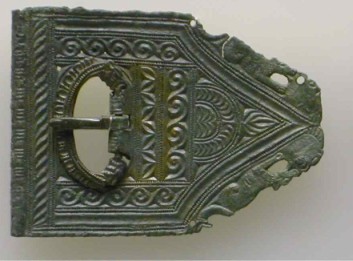
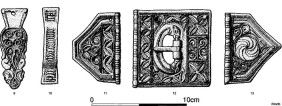
This system is supported by other buckle plates and their rivet measurements as detailed in the book by YPEY (7) A similar museum examples from the Archaeological Museum, Munich. (photo from www.romancoins.info )
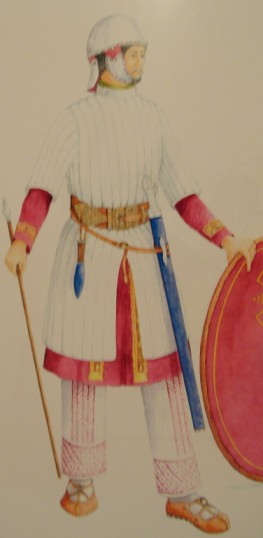
- Soldier picture by M. Daniels Click on Pictures for higher resolution
|

(1) References to similar items: FEUGERE, Michel; Weapons of the Romans, page 195-198 2002.
(2) Reference to similar items: BISHOP, M.C & COULSTON, J.C.N; Roman Military Equipment "From the Punic wars to the Fall of Rome", page 218-224 2006.
(3) References to similar items: CONNOLLY, Peter; Greece and Rome at War, page 261 1998.
(4) References to similar items: SIMKINS, Michael & EMBLETON, Ron; The Roman Army from Hadrian to Constantine, page 30 2000.
(5) References to similar items: Late Roman Buckles in Britain: Stuart LAYCOCK & Chris Marshall. 2006 http://www.lateromanbuckles.org.uk/
(6) References to similar items: BOHME, Horst; "Geranische Grabfunde Des 4. bis 5. Jahrhunderts" page. 162
(7) References to similar items: YPEY, J; "Zur Tragweise fruhfrankische Gurtelgarniturn auf grund niderlandische befunde" 1969.
**Note on background. Close up view of the wall of the Colosseum of Pula, Croatia. Picture taken 2014