|
|








|
|
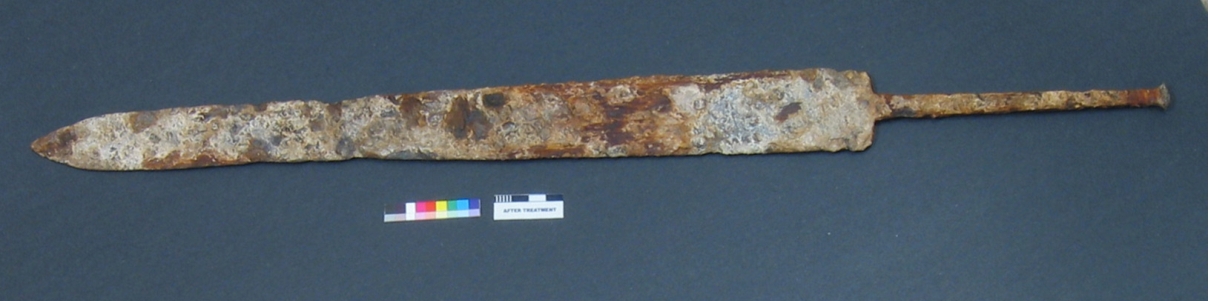
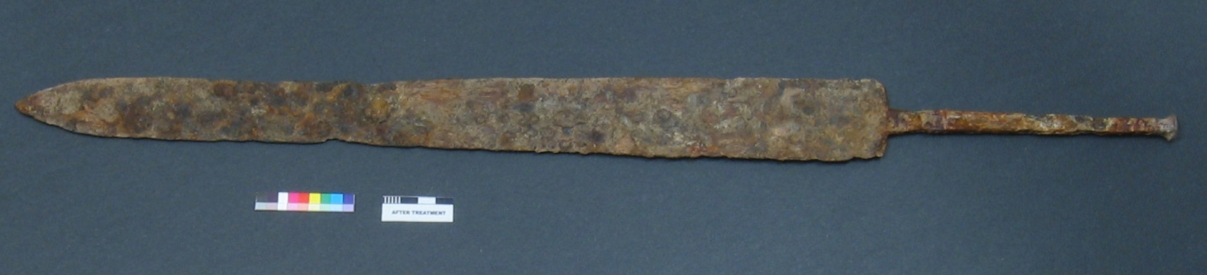
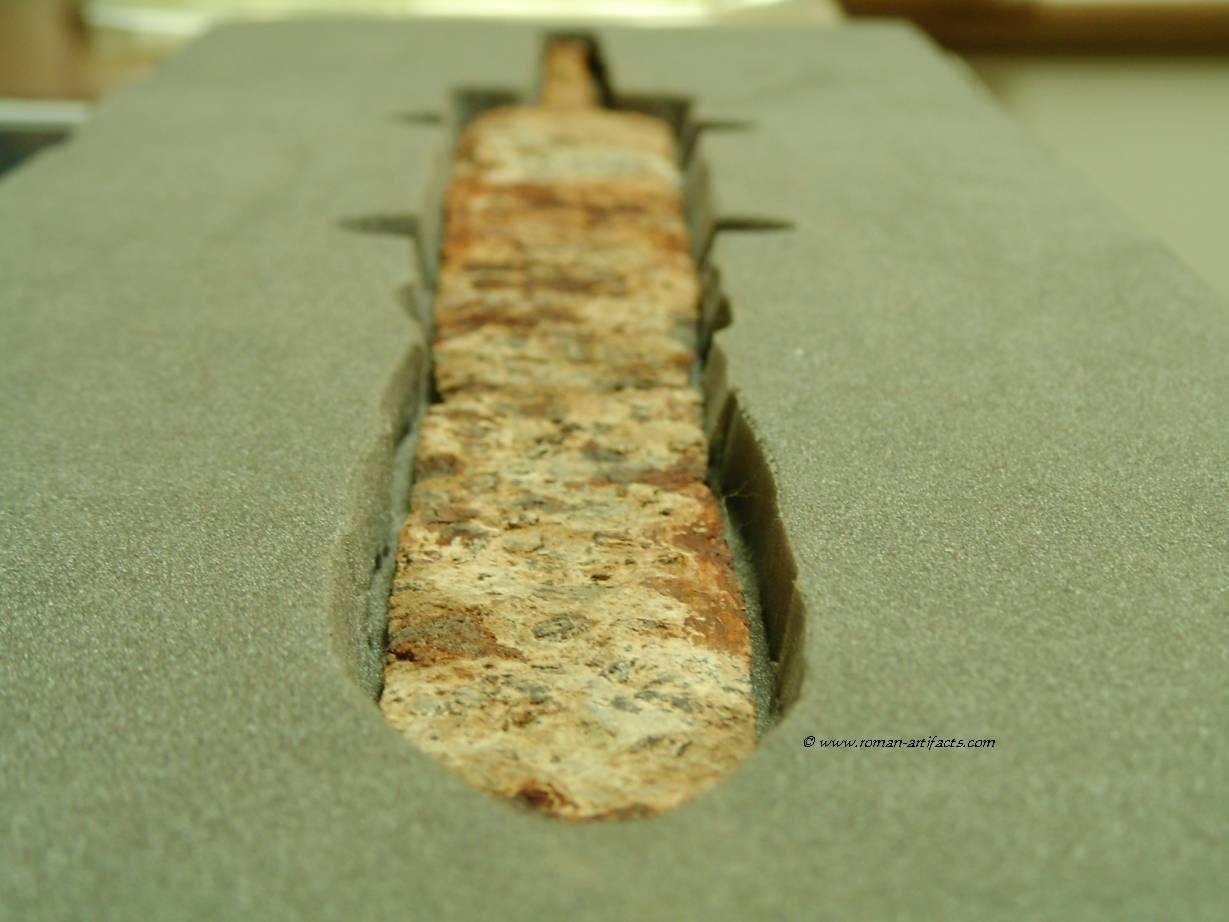
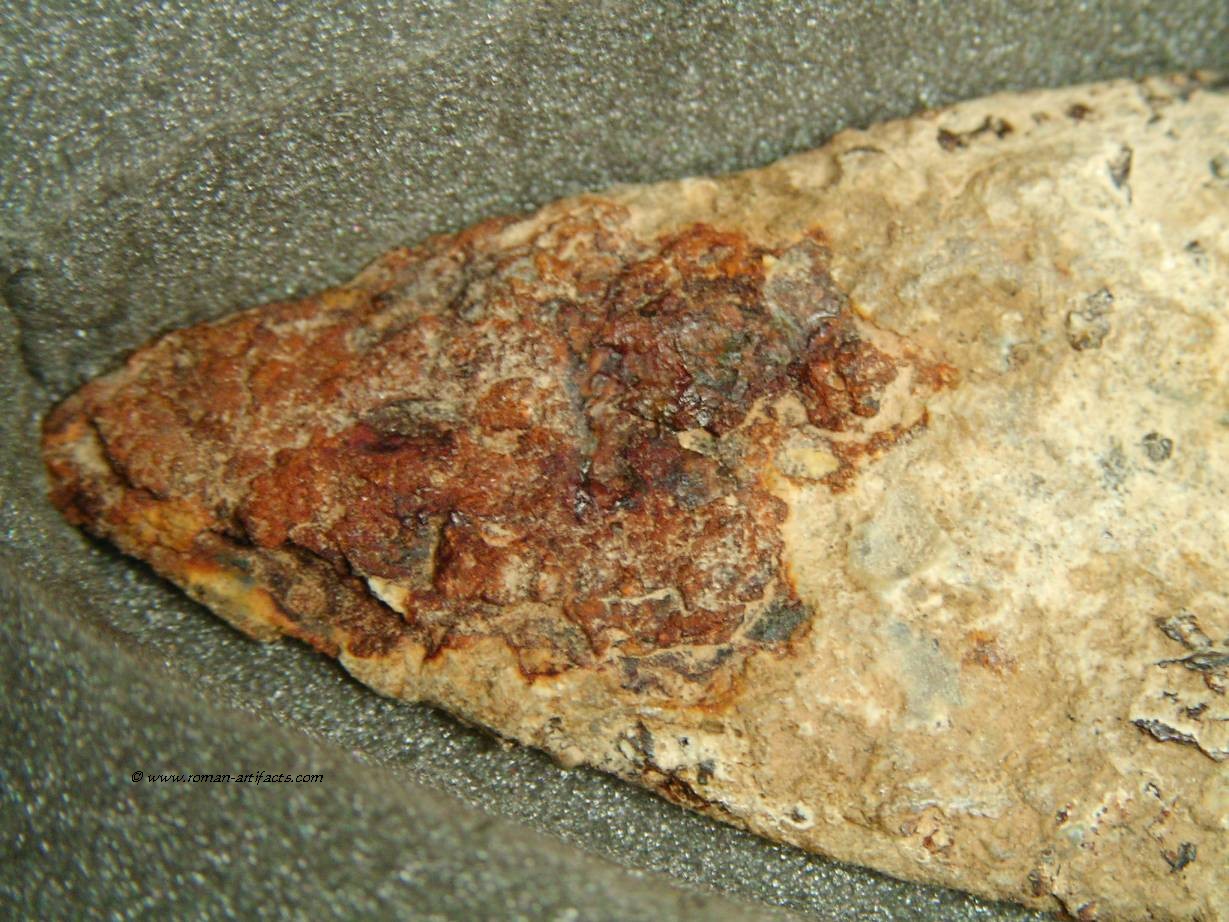
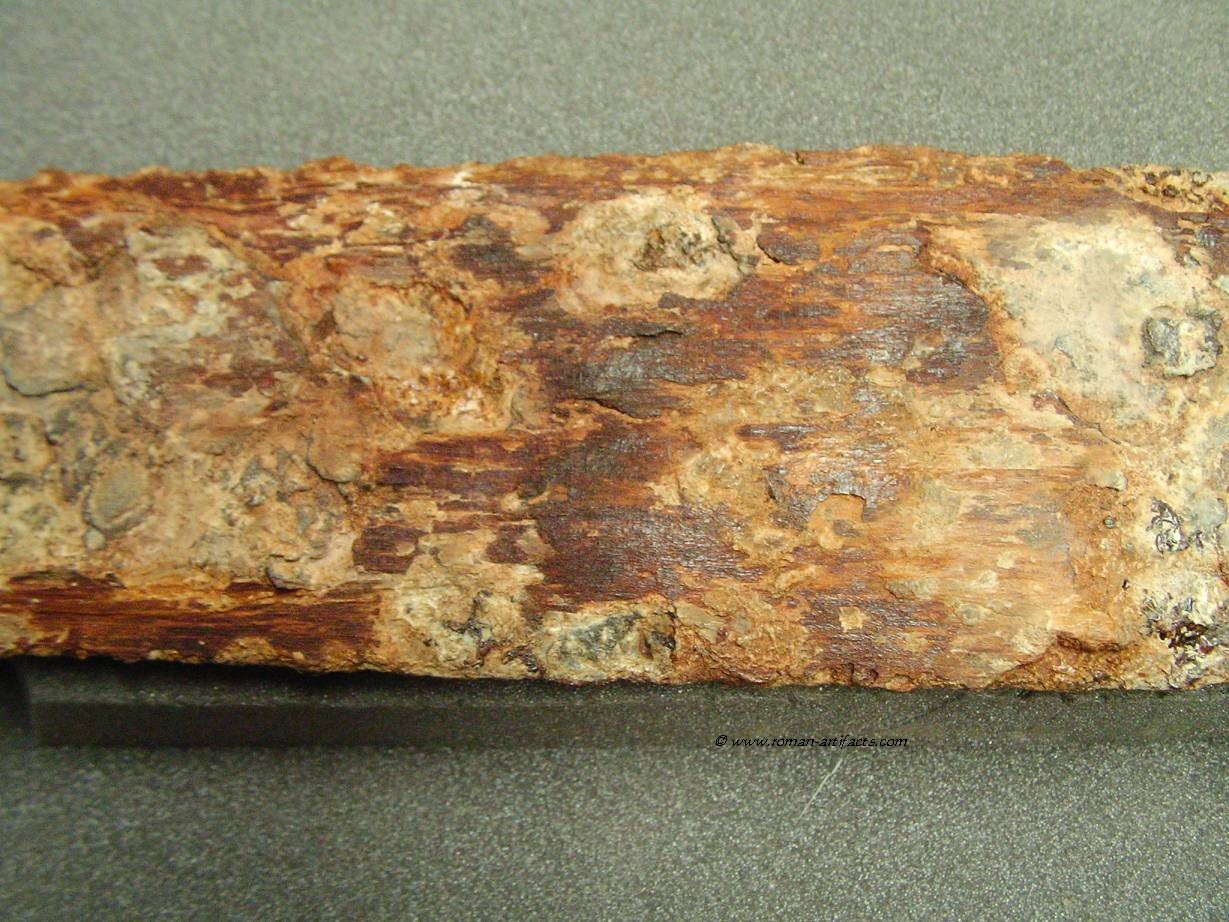
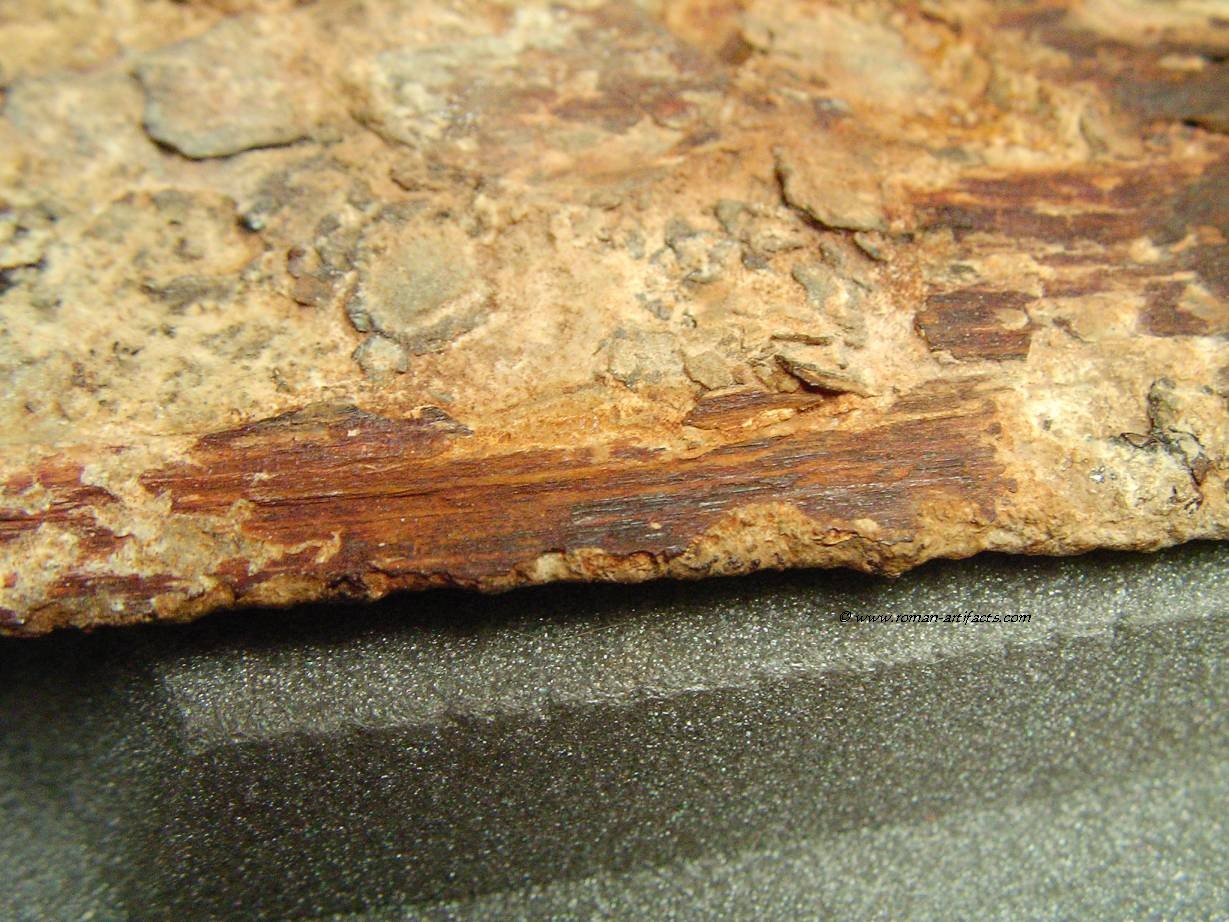
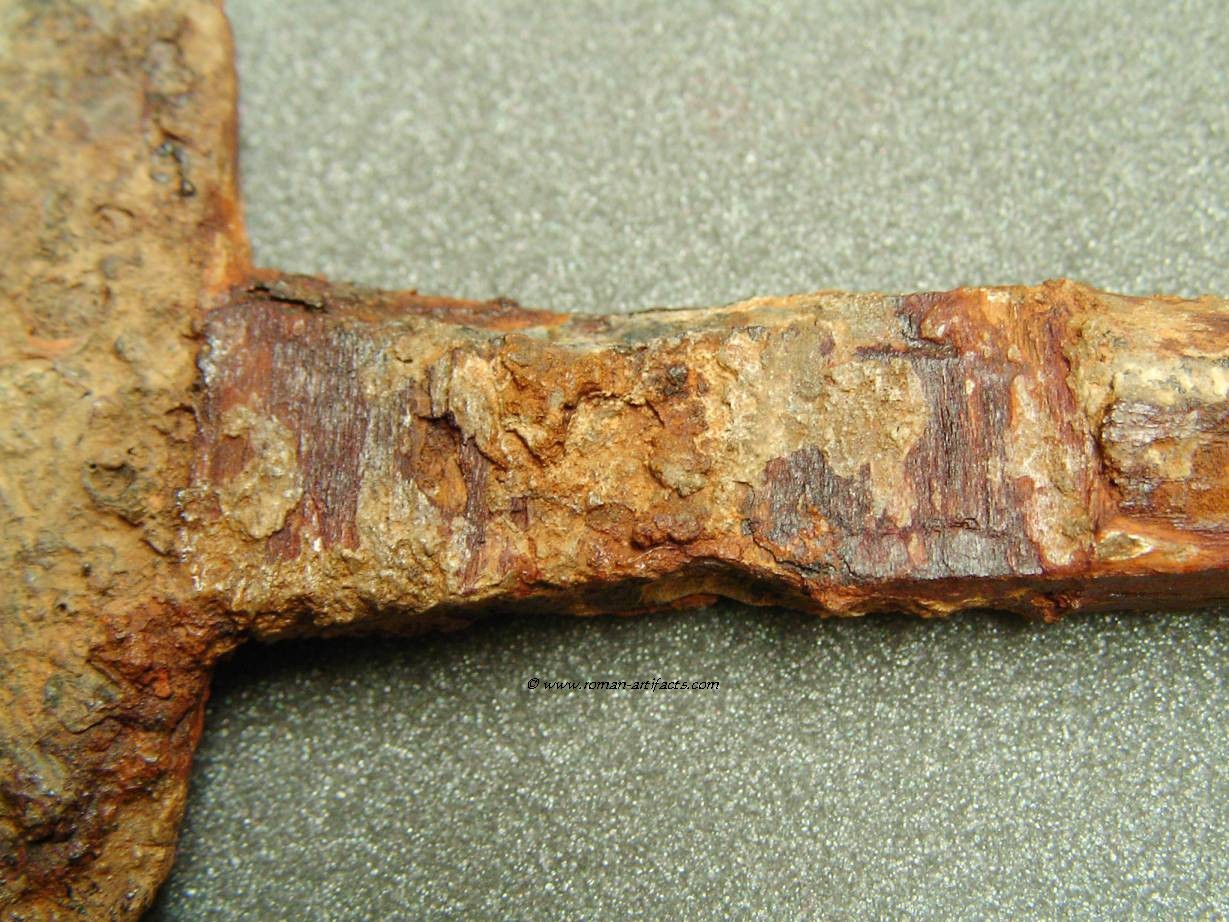
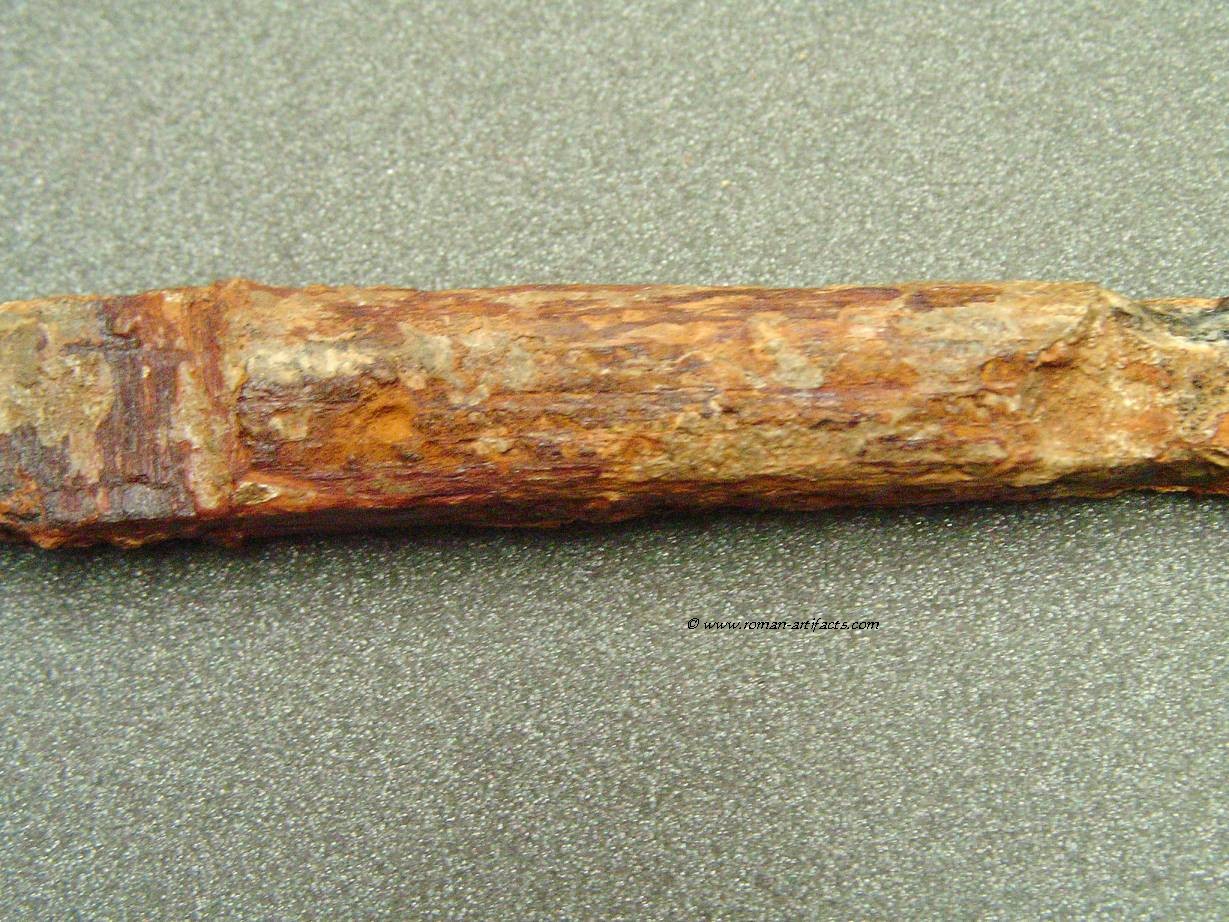
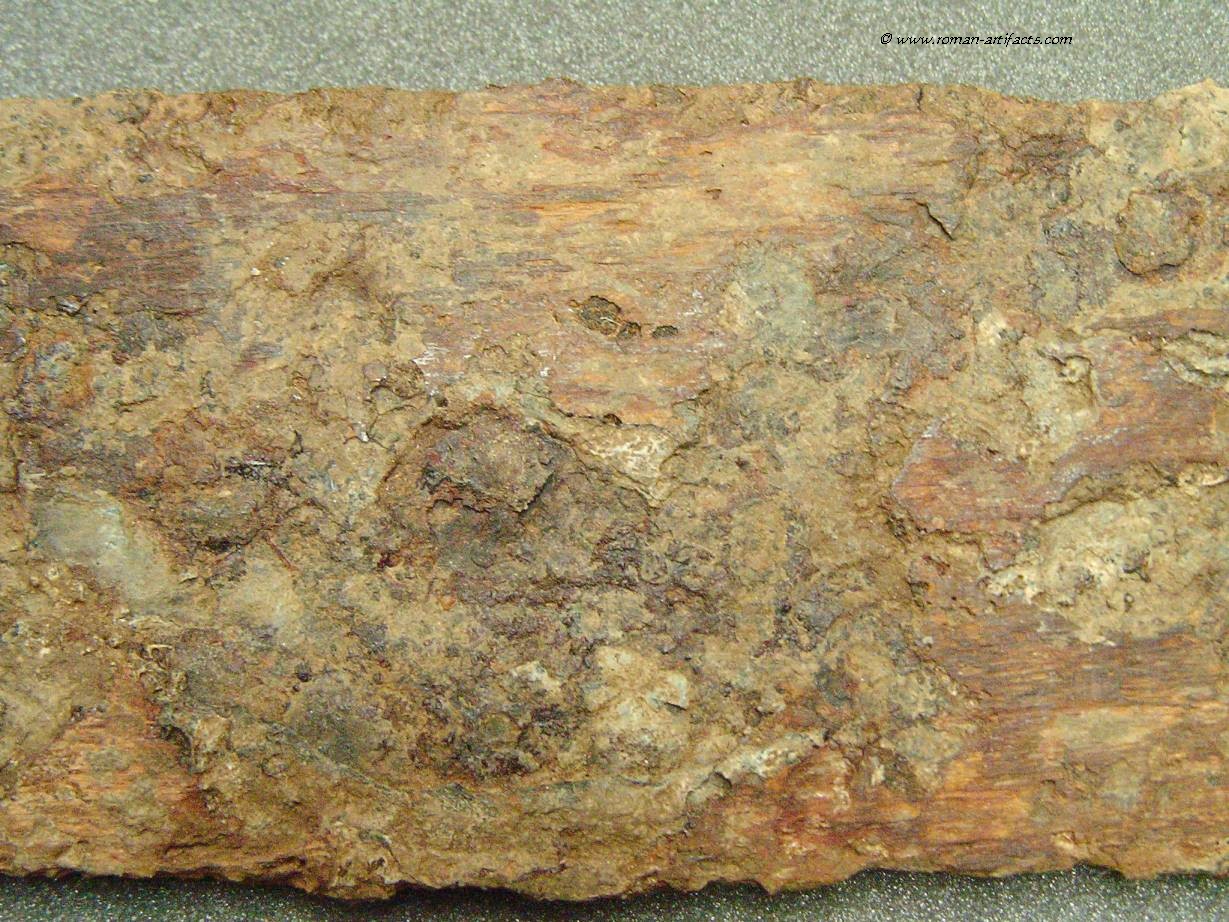
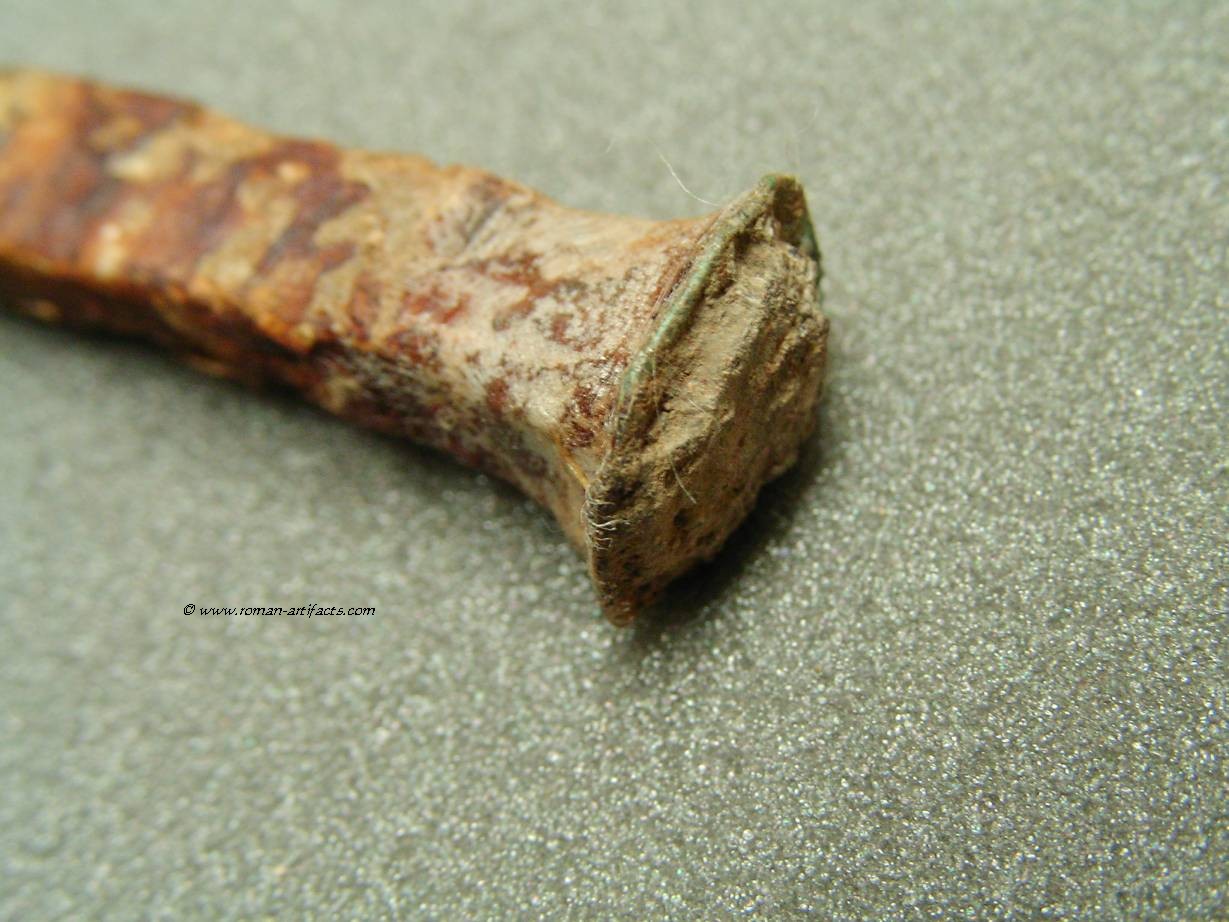
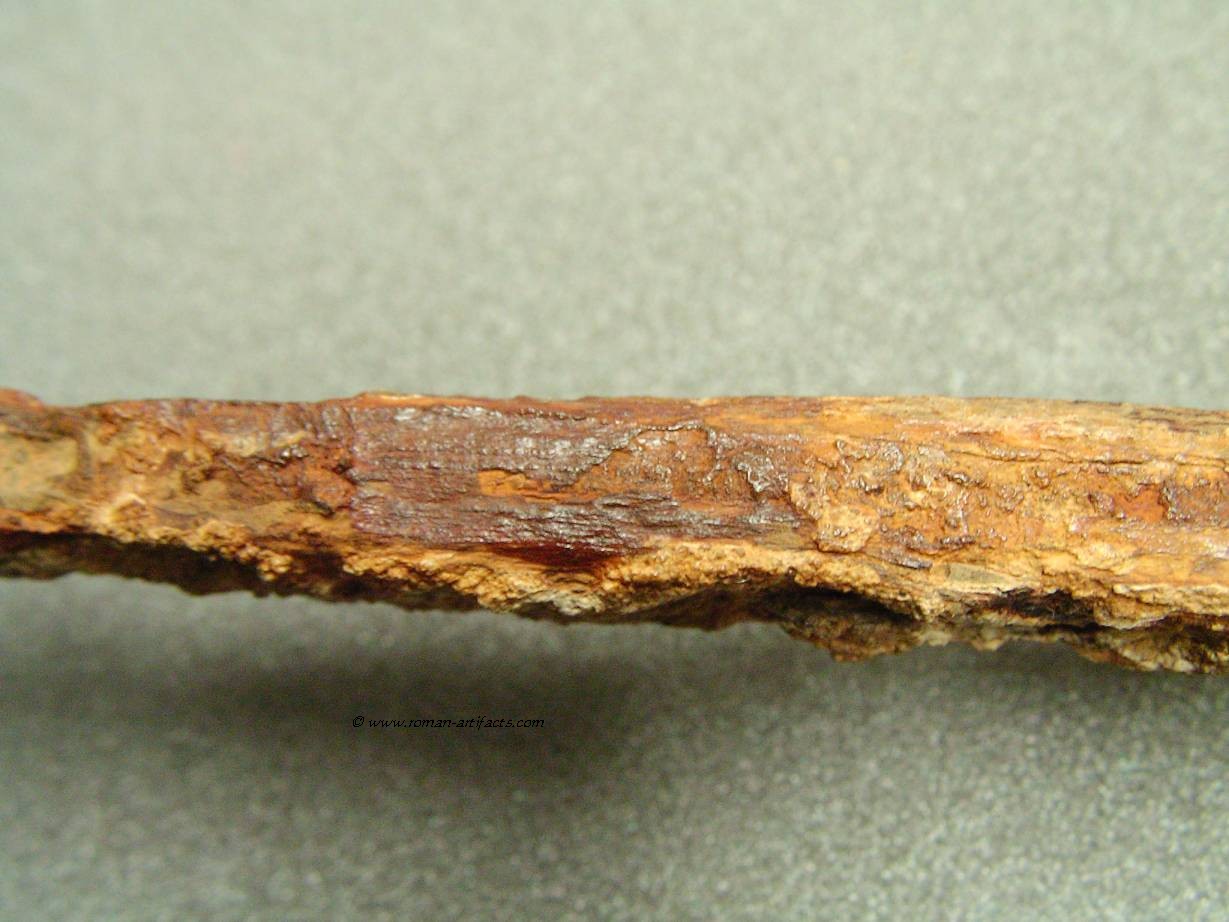
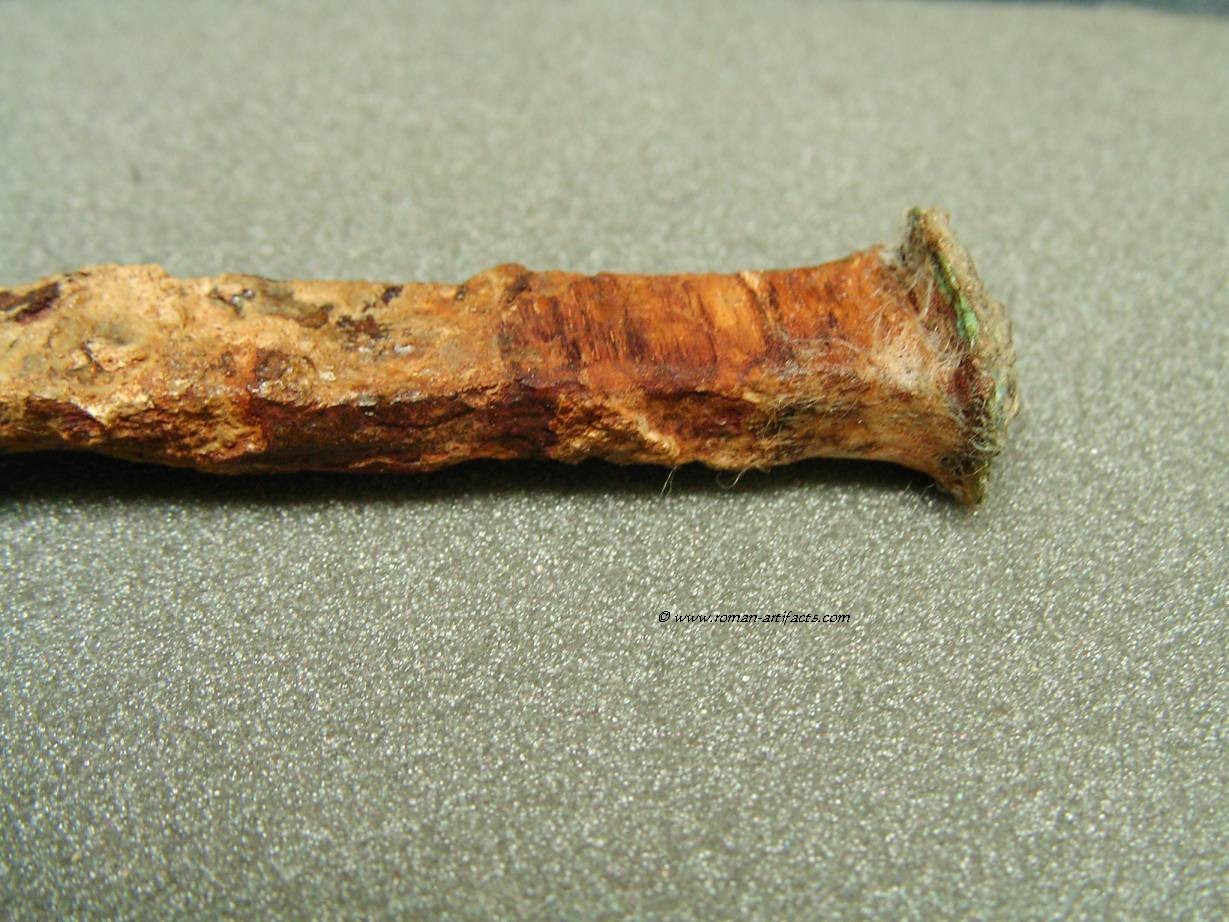
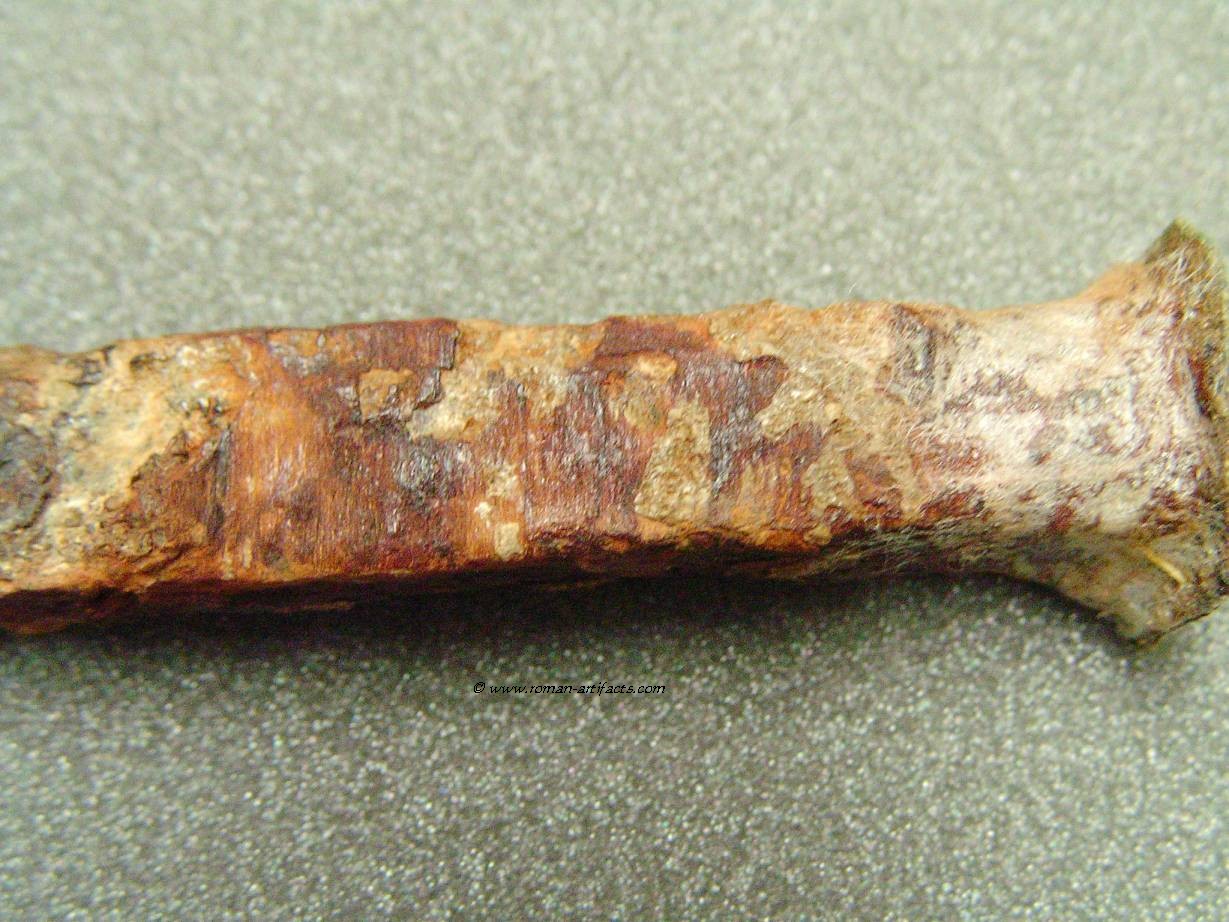
A Roman iron sword with a largely solid blade that was partially covered in what is believed to salt and/or lime deposits and encrustations. Restoration & conservation has been completed, revealing what is believed to be wood impressions over the length of the blade on both sides. The heavily corroded iron was stabilized and large portions of the encrustations removed. The majority of these deposits are believed to be maintaining the stability of the sword. There are clear indications of where the pommel piece was as well as where the guard once existed(indicated by the perpendicular impressions on the hilt). The rectangular bronze washer is still present at the end of the hilt, meant to divide the pommel from the butt end of the iron hilt. This end could then be hammered down to solidly lock all the grip sections into place. Restoration work was completed to secure a crack in the hilt (indicated by the visible fibers at the end of the hilt). PDF Link to Restoration Photo's PDF Link to Restoration Report Identification of the Sword This sword has been somewhat difficult to directly identify, although it certainly is Roman, the exact period is still not 100%. Through out the Roman period especially after the 2nd Century, the Roman army lost some of its consistency and there were many local variants of swords and equipment. This is not unusual when considering the empire spanned from Britain to Jerusalem. This sword does fit somewhere within a certain period and can be ruled out of most centuries. The late Roman historian Flavius Vegetius Renatus describes the army of the 4th Century carrying a "semi-spatha" which simply a shorter version of the longer Spatha. This semi-spatha may have acted as a secondary weapon. The following is a step by step analysis of why the date range was picked.
- The ogival shape of the point(as
opposed to triangular) makes it most likely later than 200AD(it's
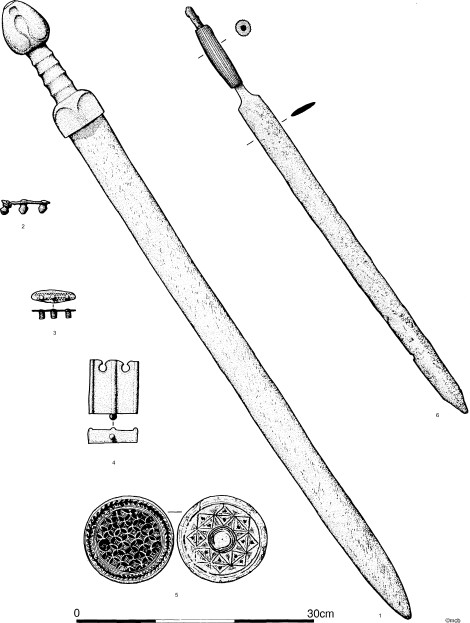
not of the pompeii/republican type) Late Roman Classification The blade matches the general shape of the 4th Century find at Koln, although it is slightly shorter and narrower (Koln L: 720mm W: 52mm). The sword at Koln had a niello-inlaid disk chape (similar in style to this example) Another find from the Alzey also dated to the late 3rd early 4th Century is actually of similar length (470mm). Both of these swords are also of the tapering type. See Michael Bishop photo below:
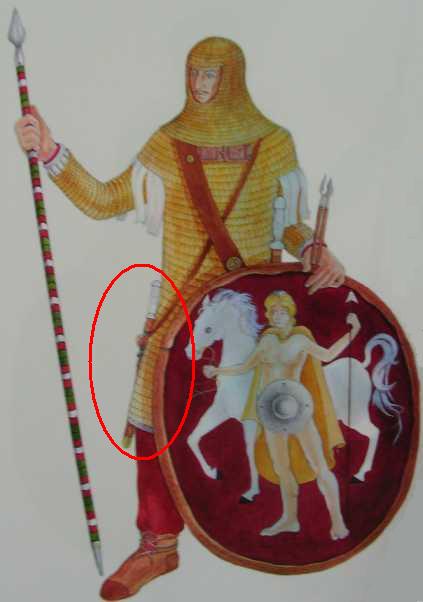
Provenance: ex collection of Bernard Estermann since 1967(#19) Germany believed to be from the Xanten or Castra Vetera(South Western Germany) near the Rhine River. Legio XXX Ulpia Victrix was posted there from the 122AD until at least 400AD defending the Roman frontier as part of the ‘Nedergermaanse Limes’ or groups of forts that ran along the border there. Future work: The item will soon be submitted to x-rays in an attempt at determining the forging method as well as the possible metal composition, which would provide hints as to where it was forged. Attempts will also be made to the this item properly published. -painting by M. Daniels
Click on Pictures for higher resolution
| ||||||||||||

(1) References: FEUGERE, Michel; Weapons of the Romans, page 117 2002.
(2) References: STEPHENSON, I.P; Roman Military Equipment "The Later Empire", page 61 & 79 2001.
(3) Reference to similar items: BISHOP, M.C & COULSTON, J.C.N; Roman Military Equipment "From the Punic wars to the Fall of Rome", page 154-160 2006.
**Note on background. Close up view of the wall of the Colosseum of Pula, Croatia. Picture taken 2014